TypeHome
LocationMagdalen Islands, QC
Year2024
TeamStefania Praf, Vincent Pasquier, Francis M Labrecque, Nicolas Lapierre
PhotosAlex Lesage
StylingEmmanuelle Roque
ConstructionRenaud Vigneau
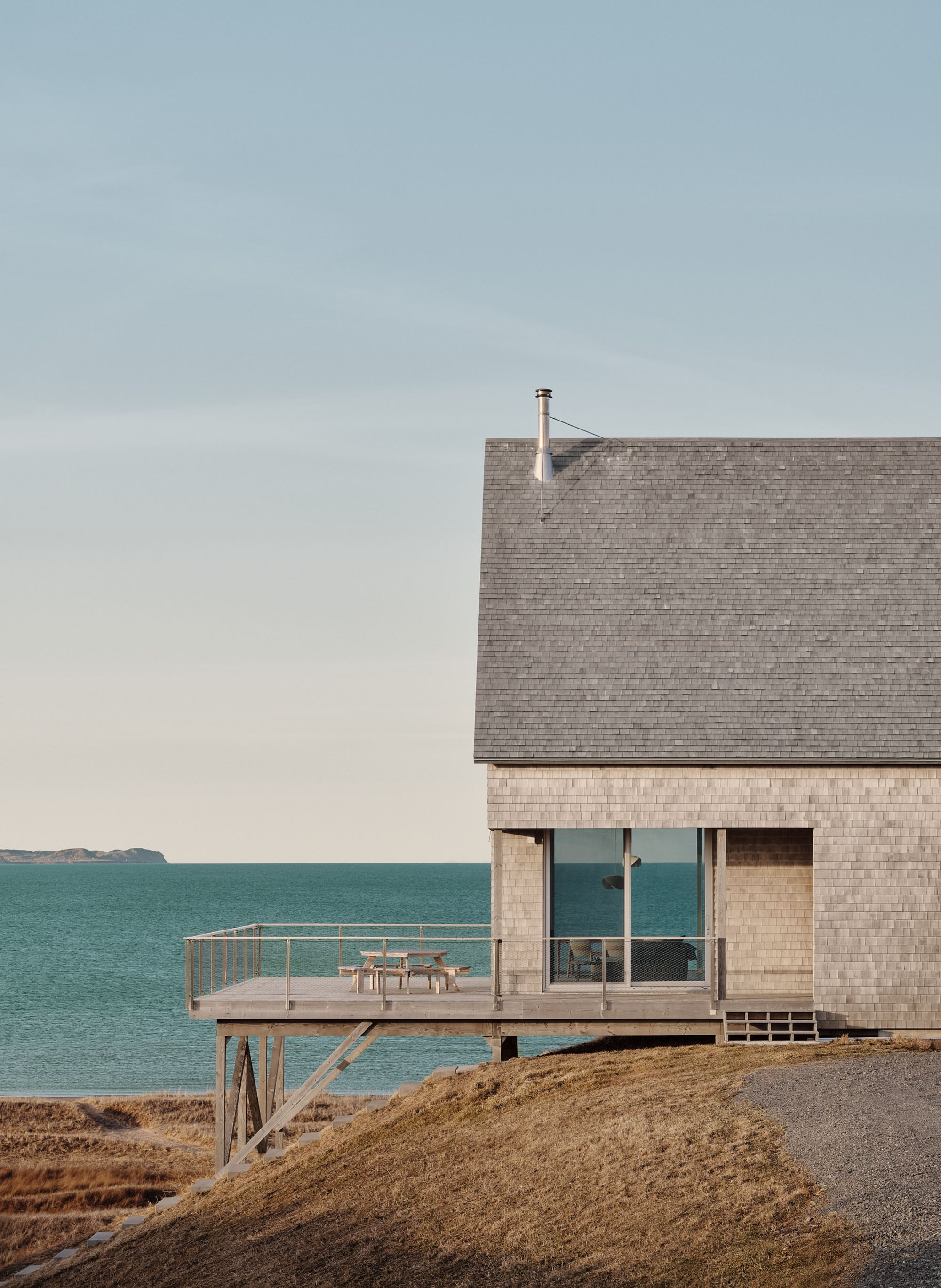
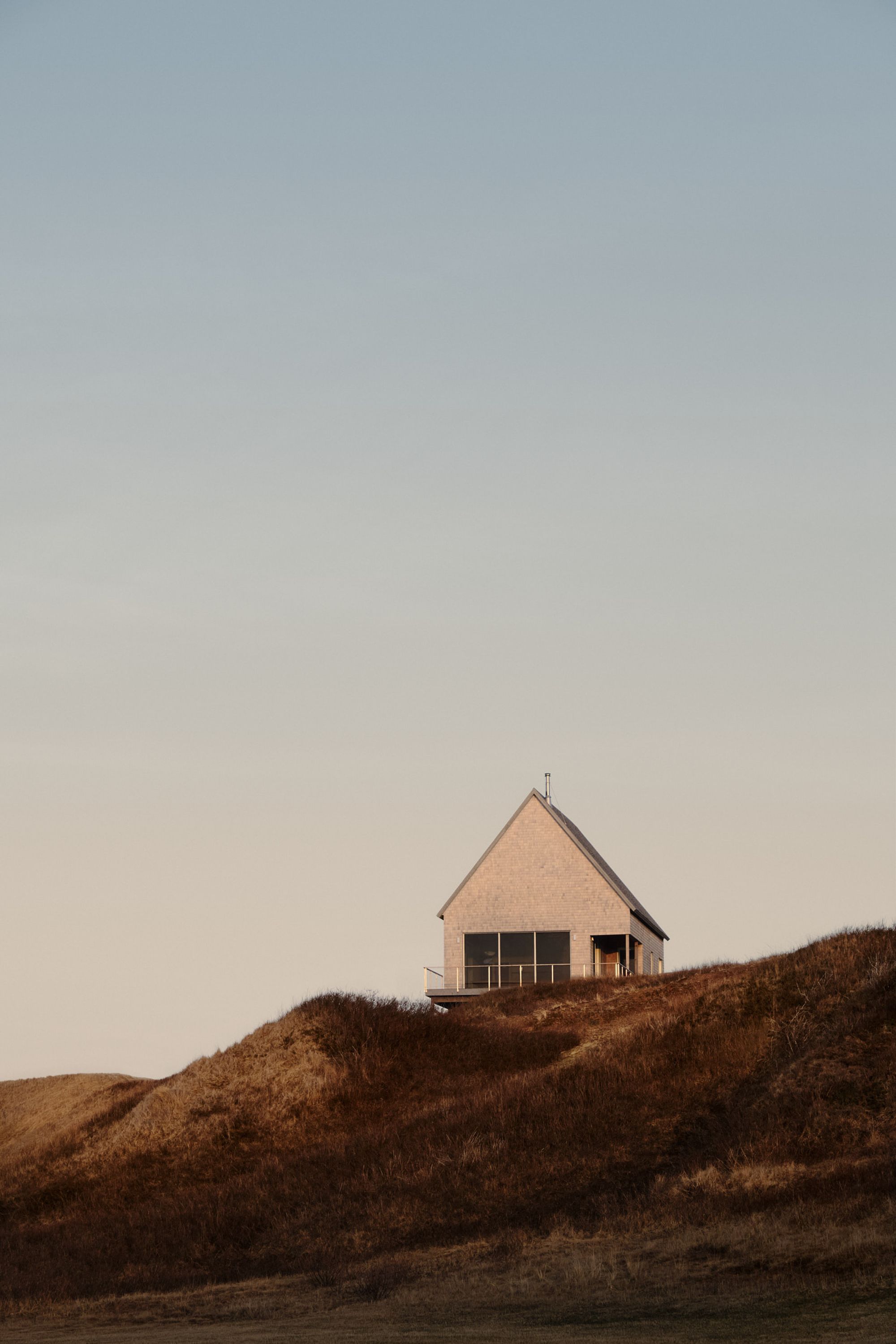
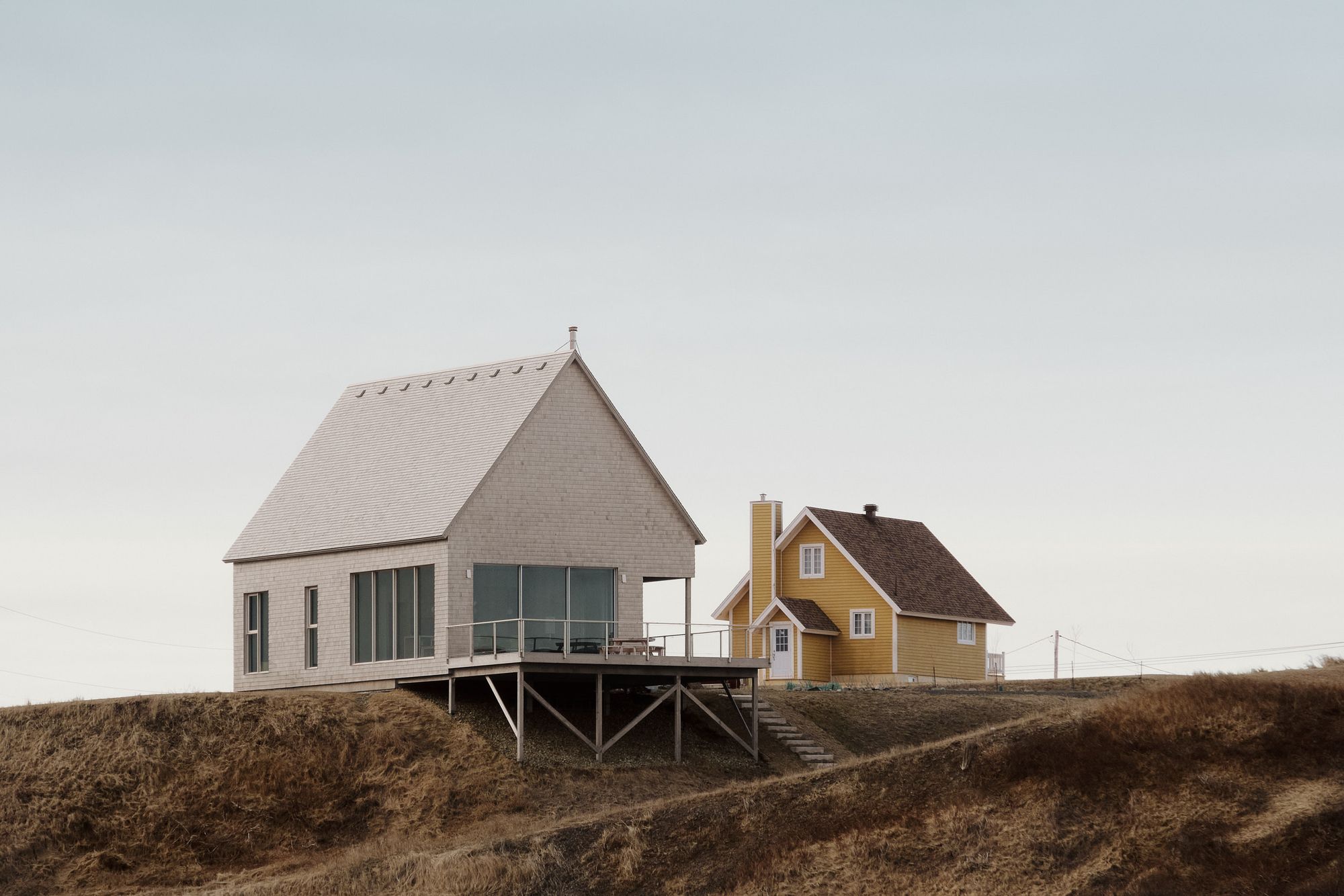
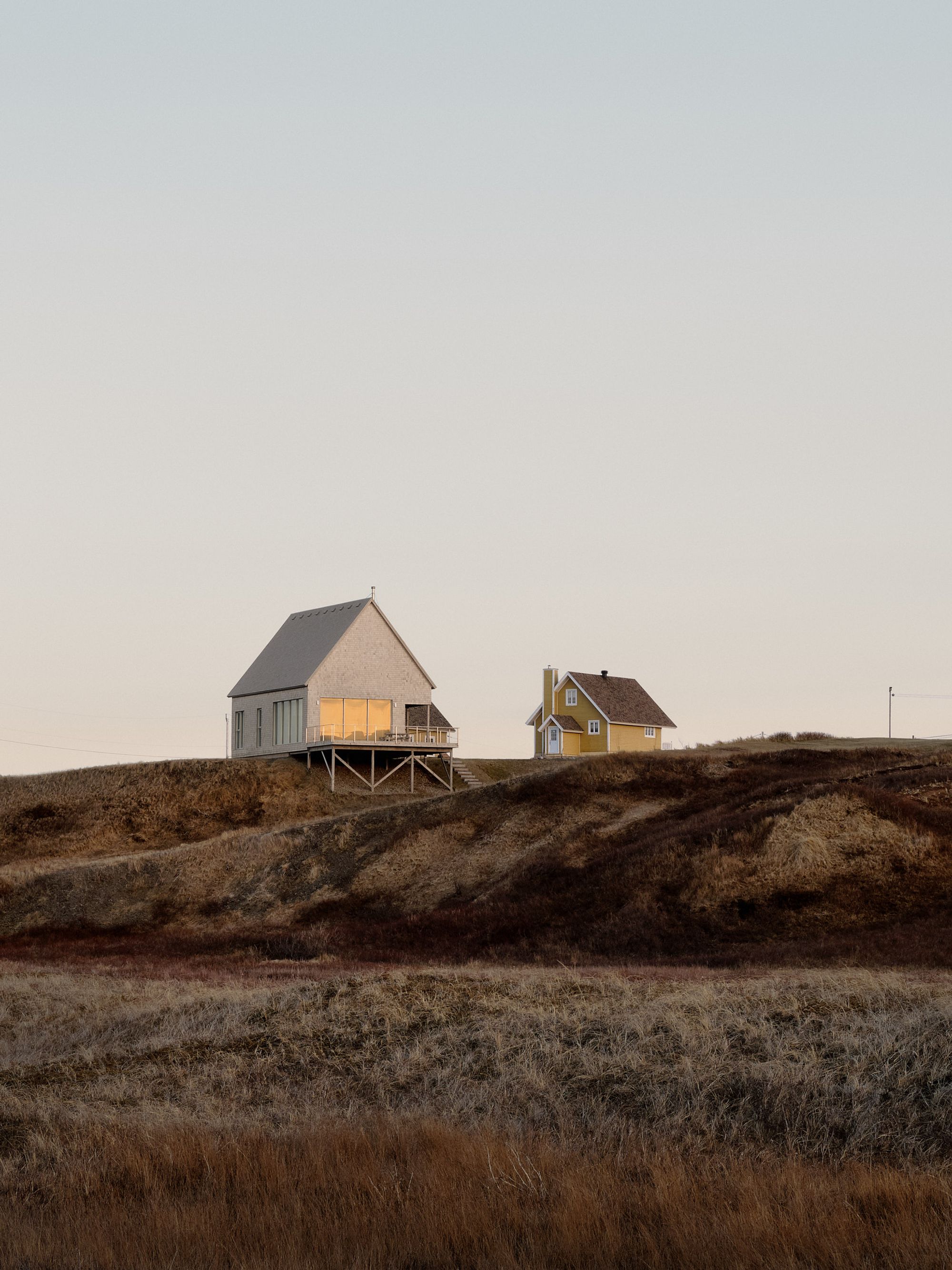
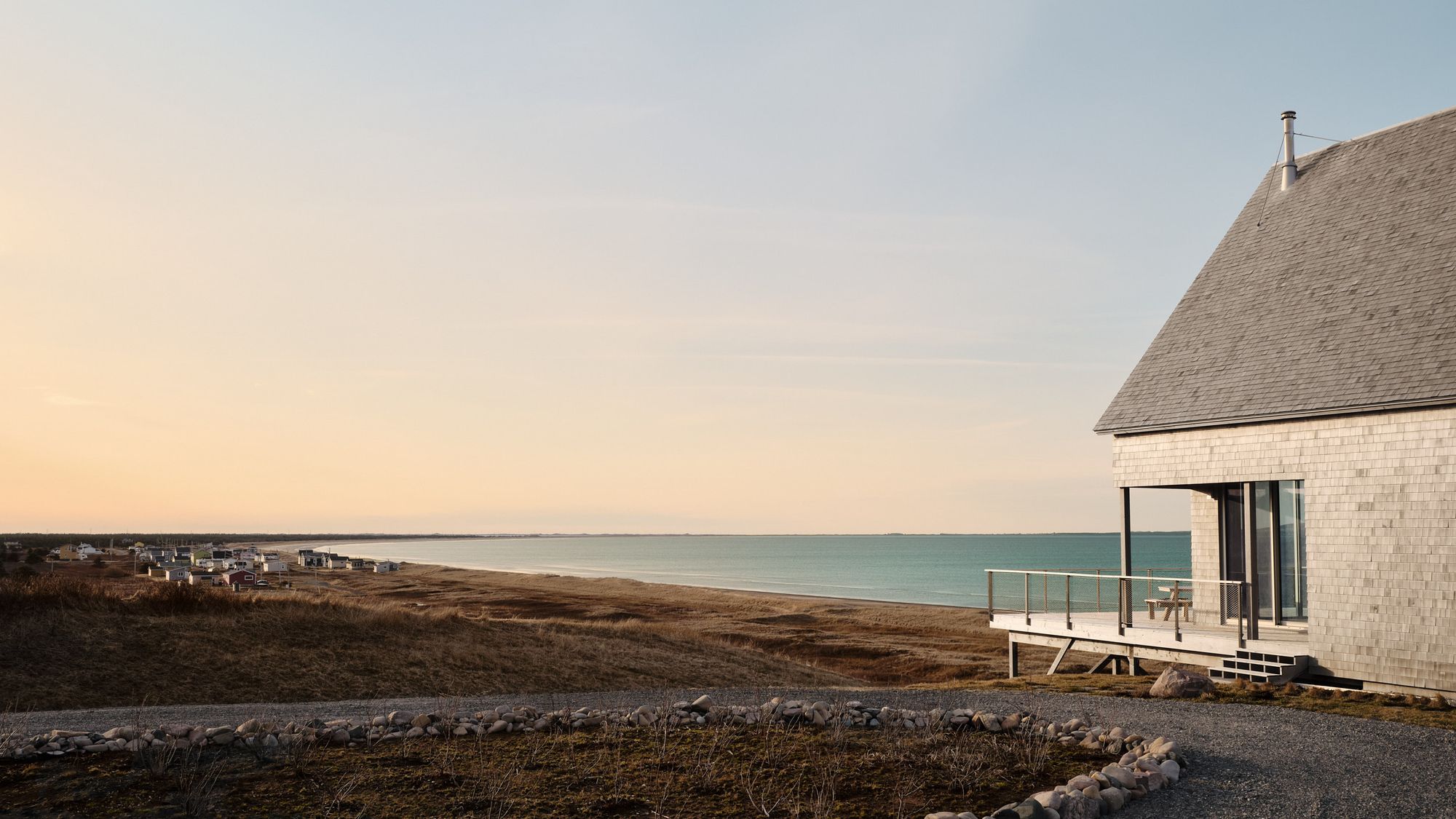
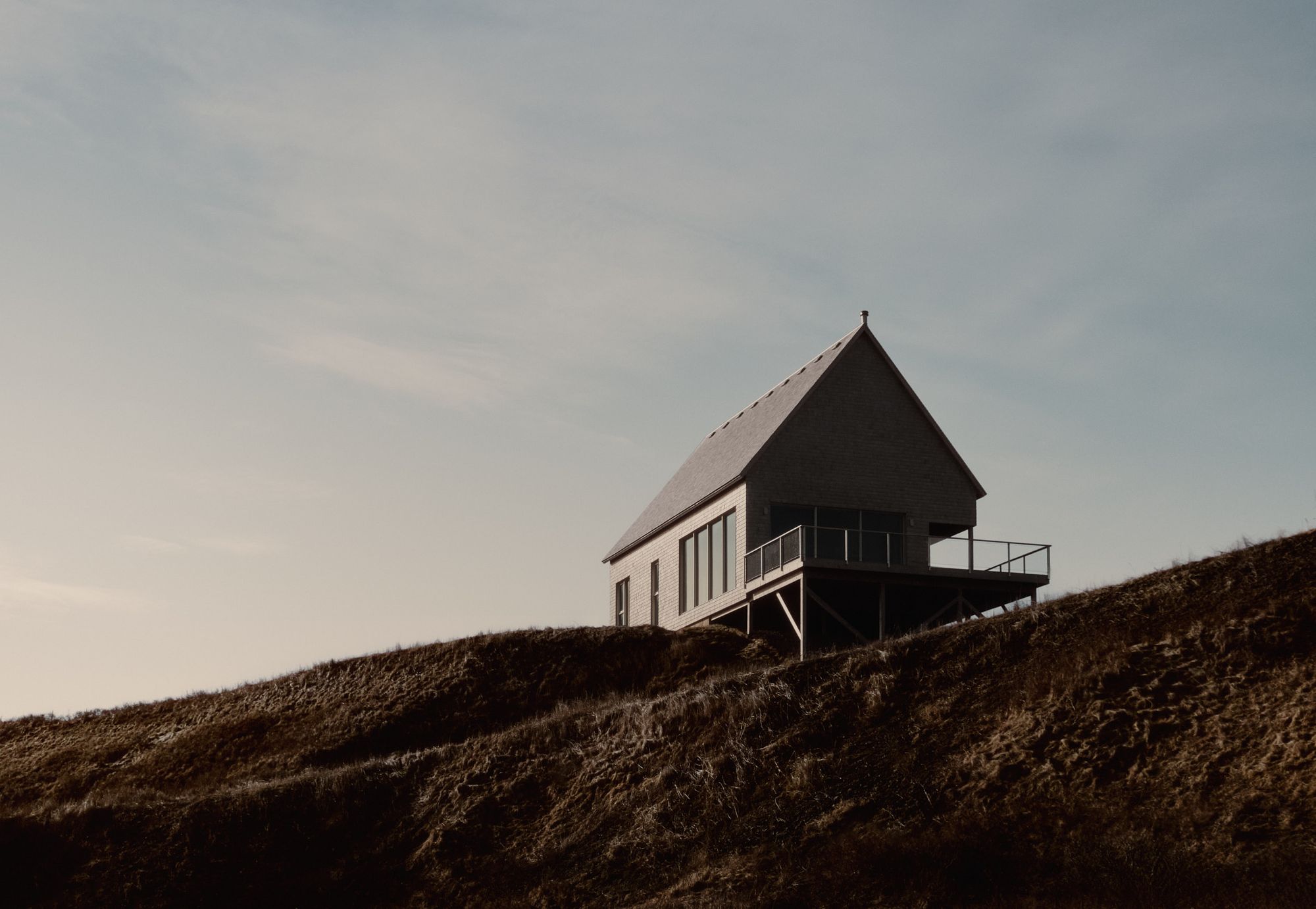
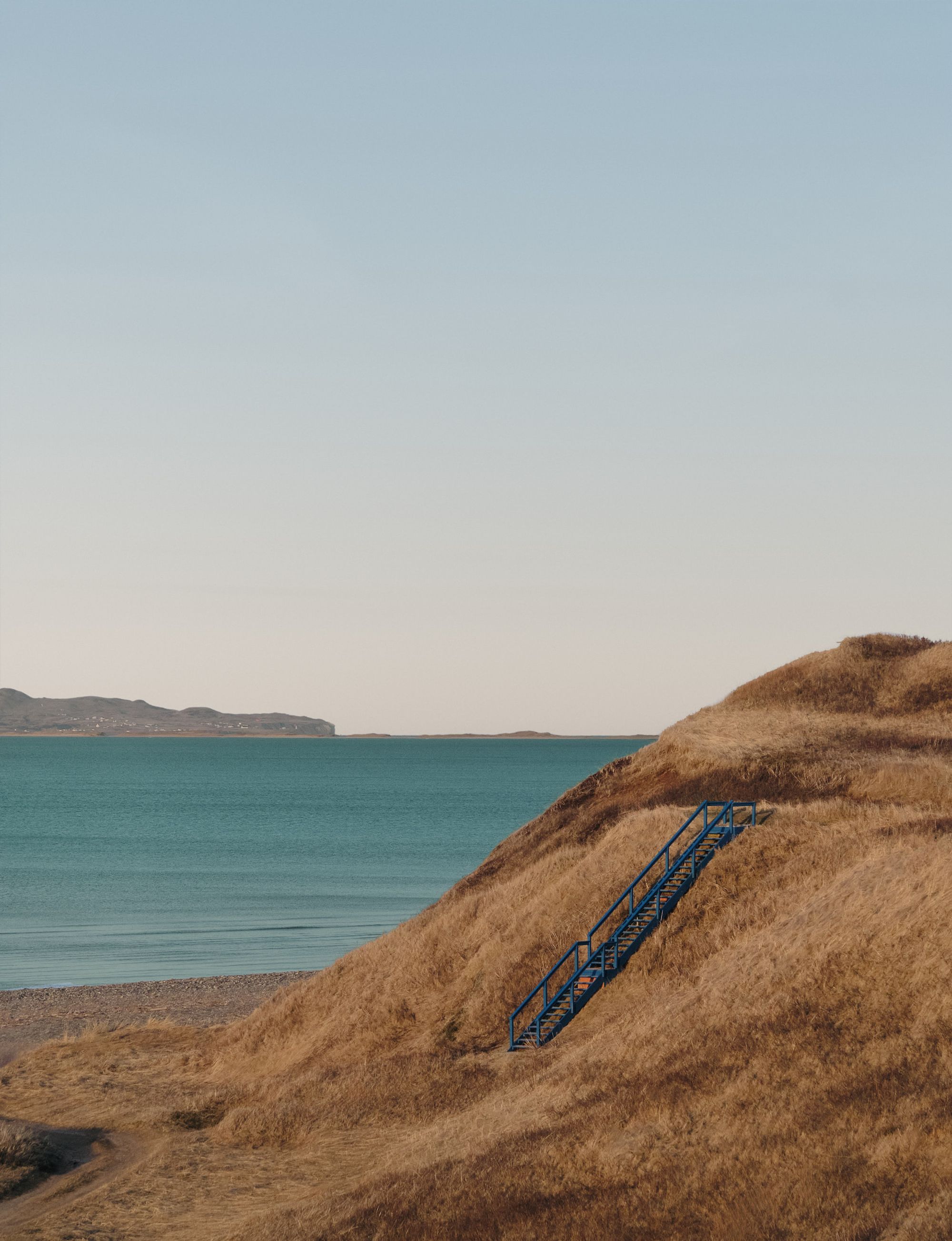
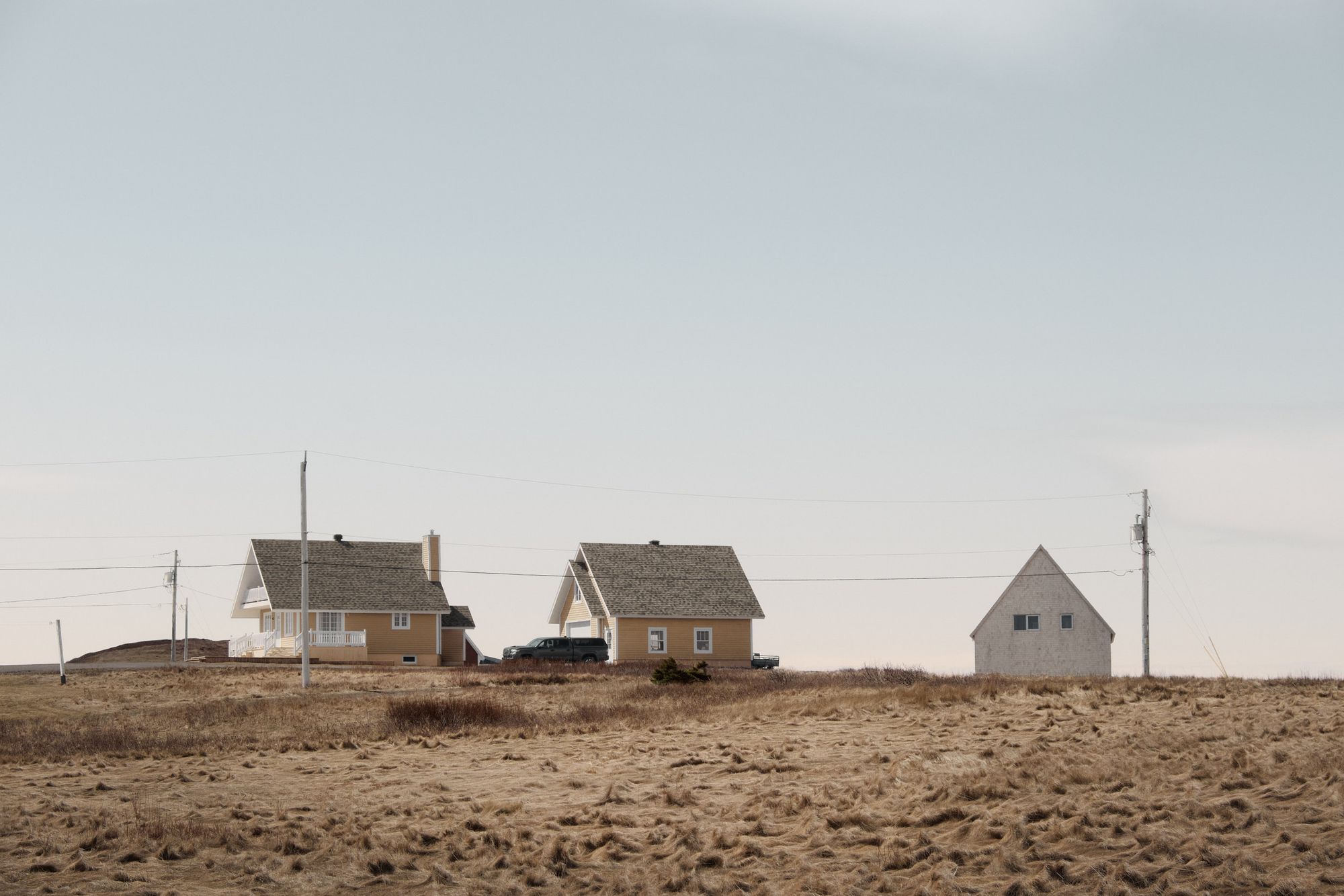
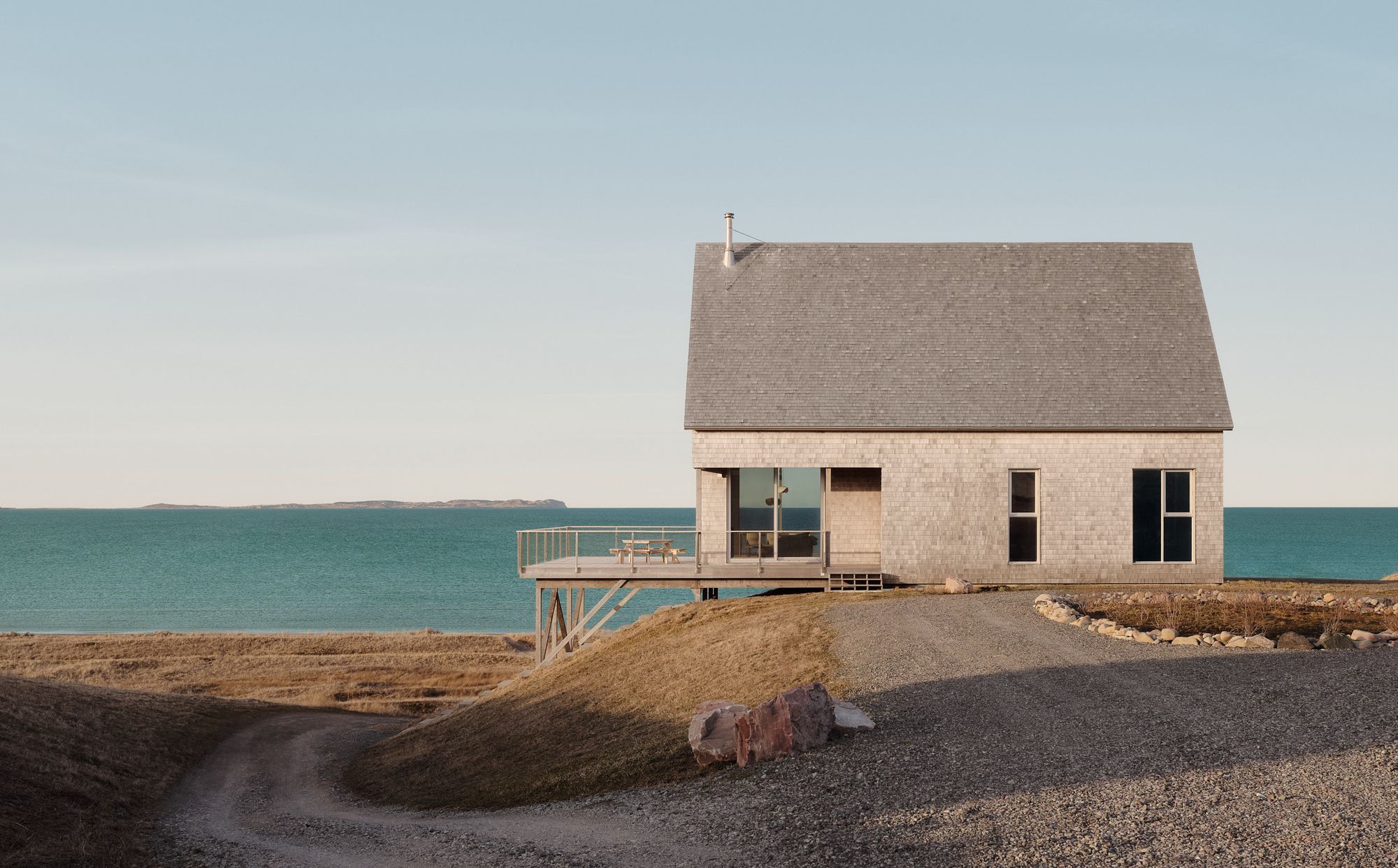
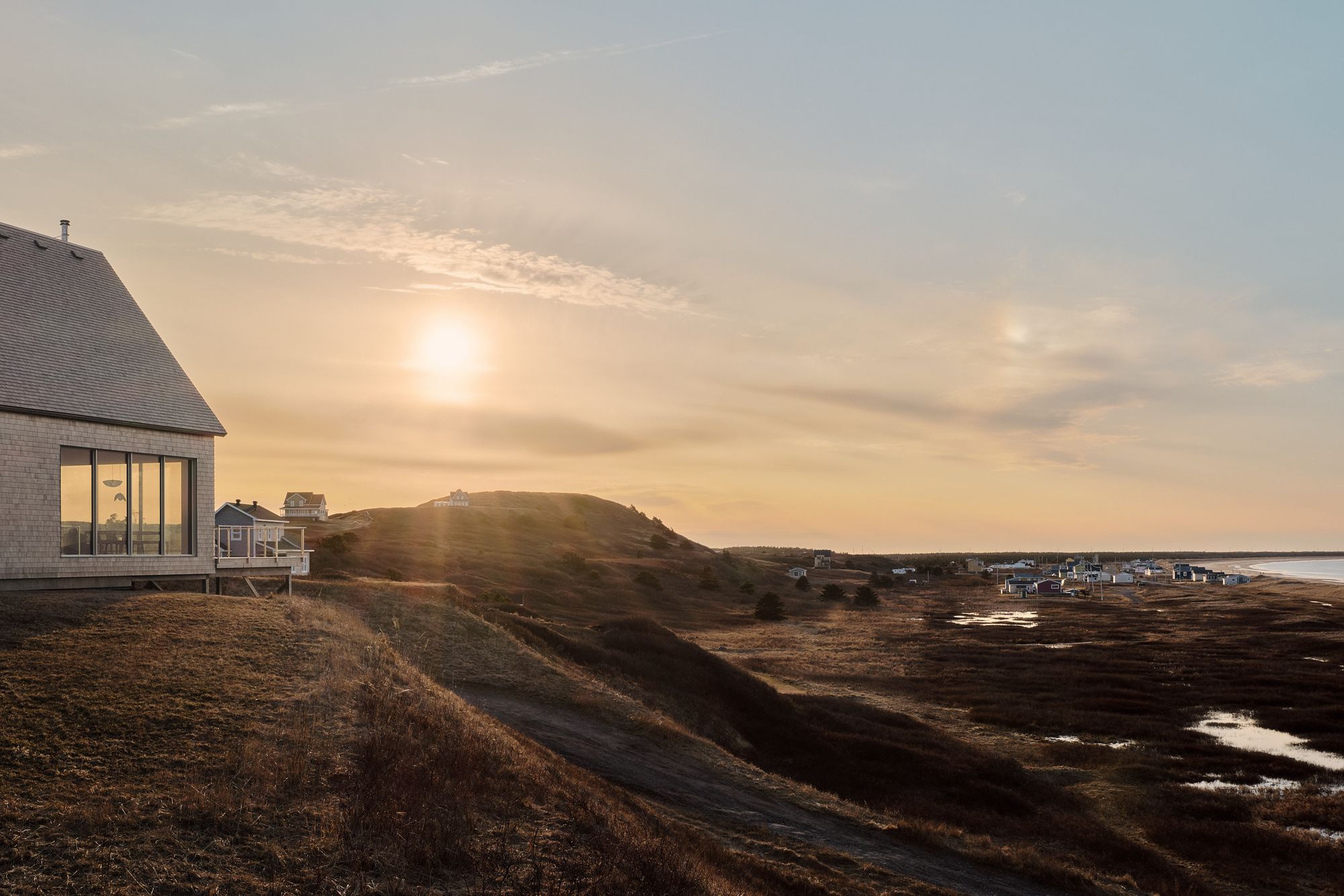
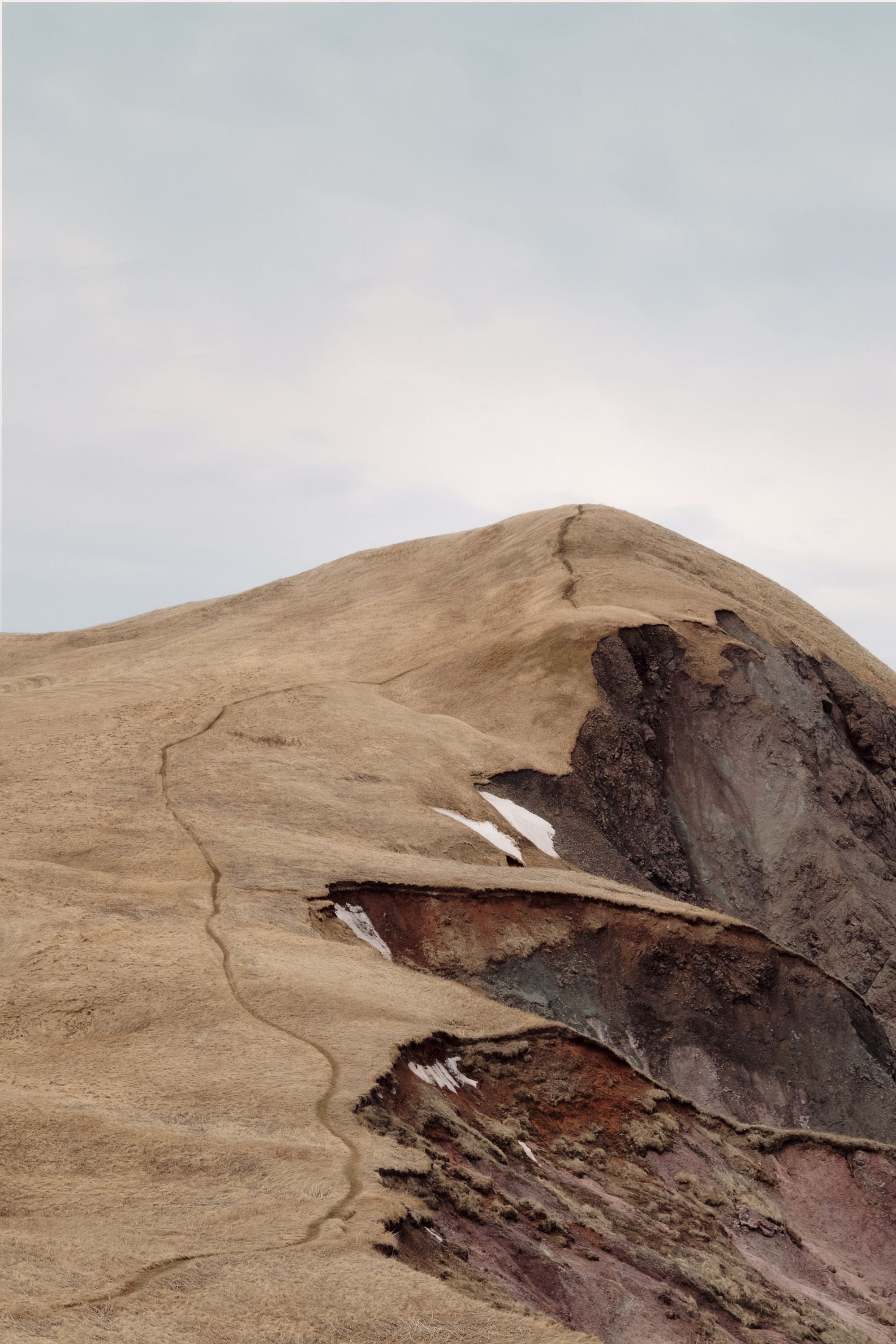
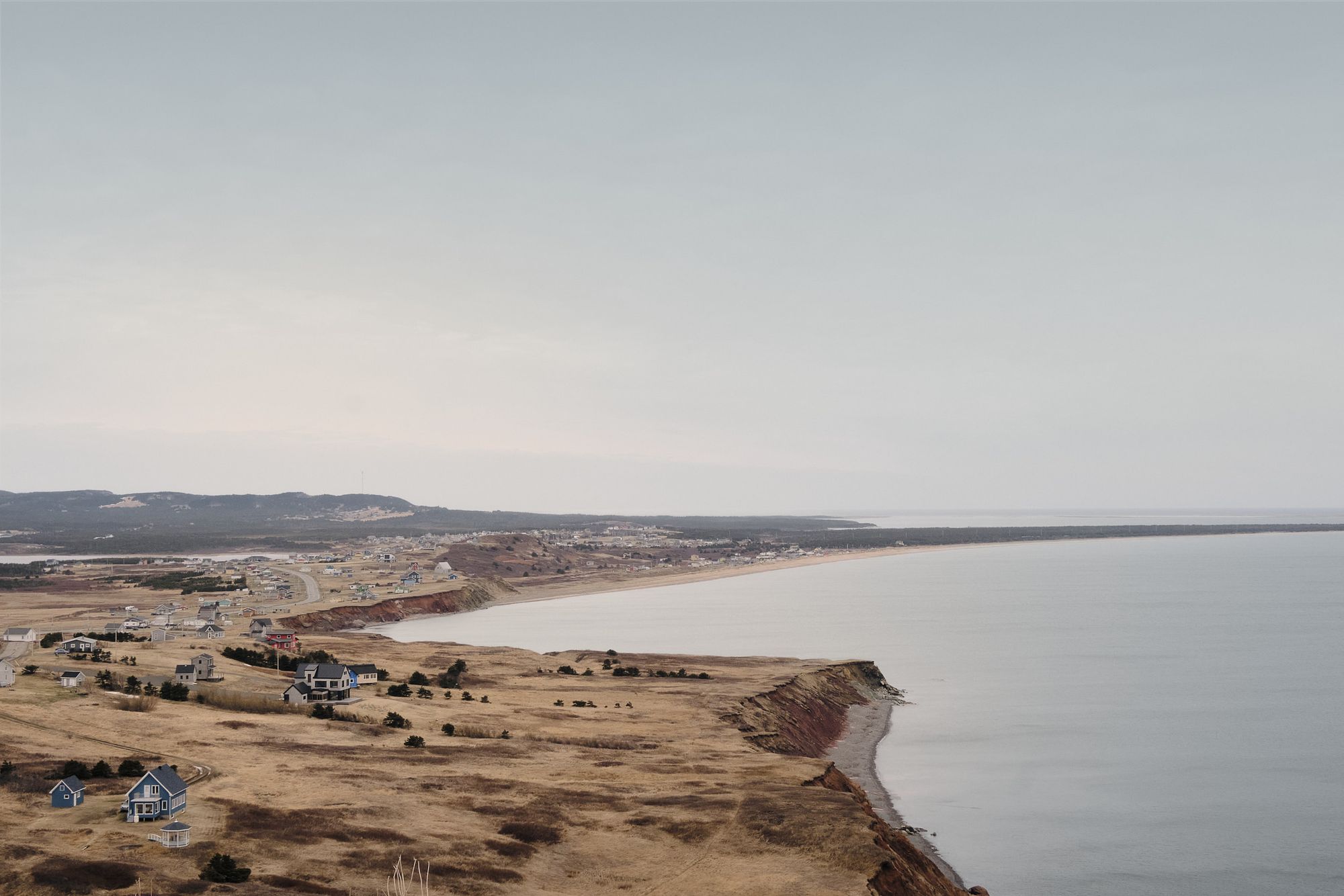
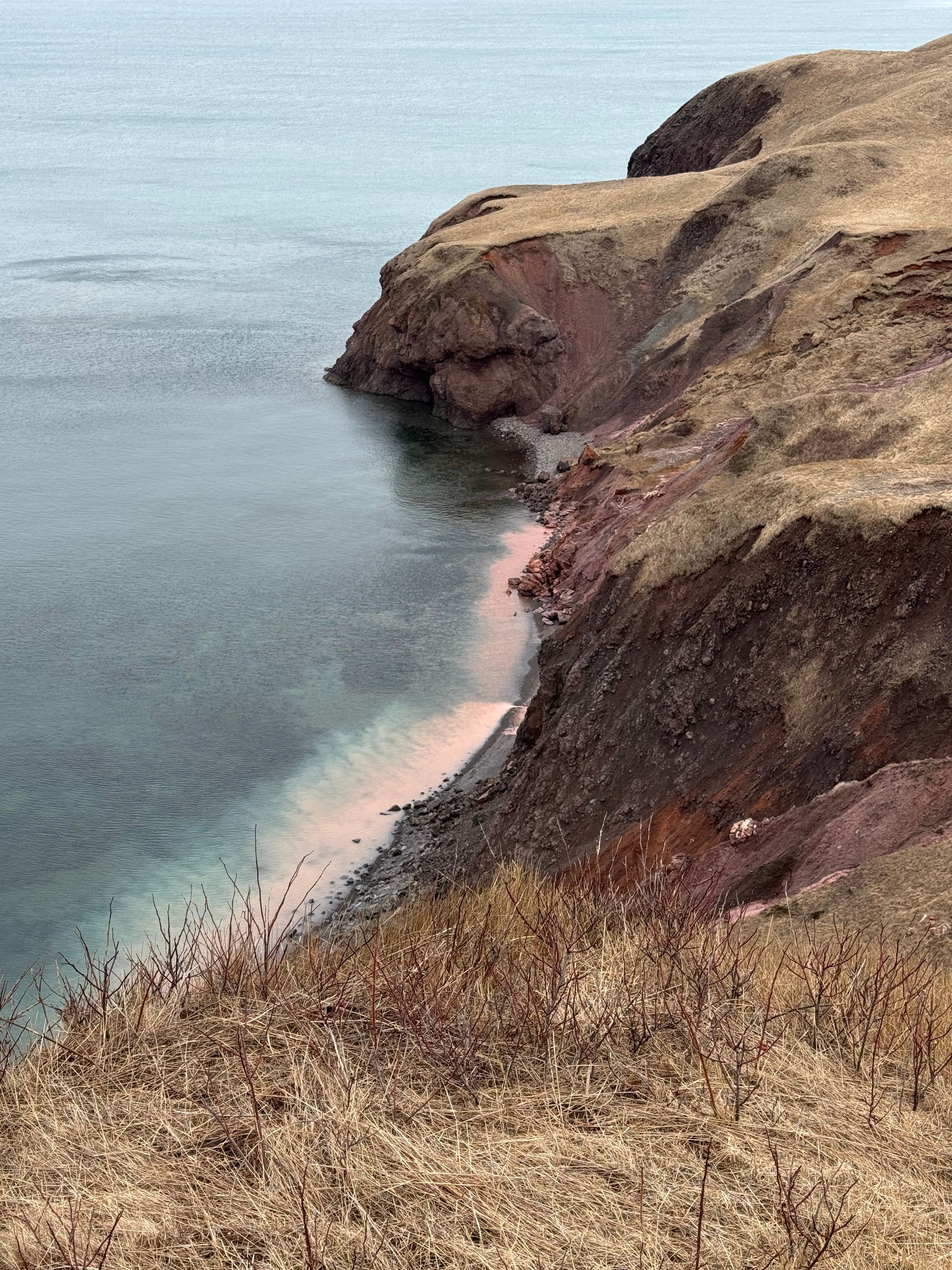
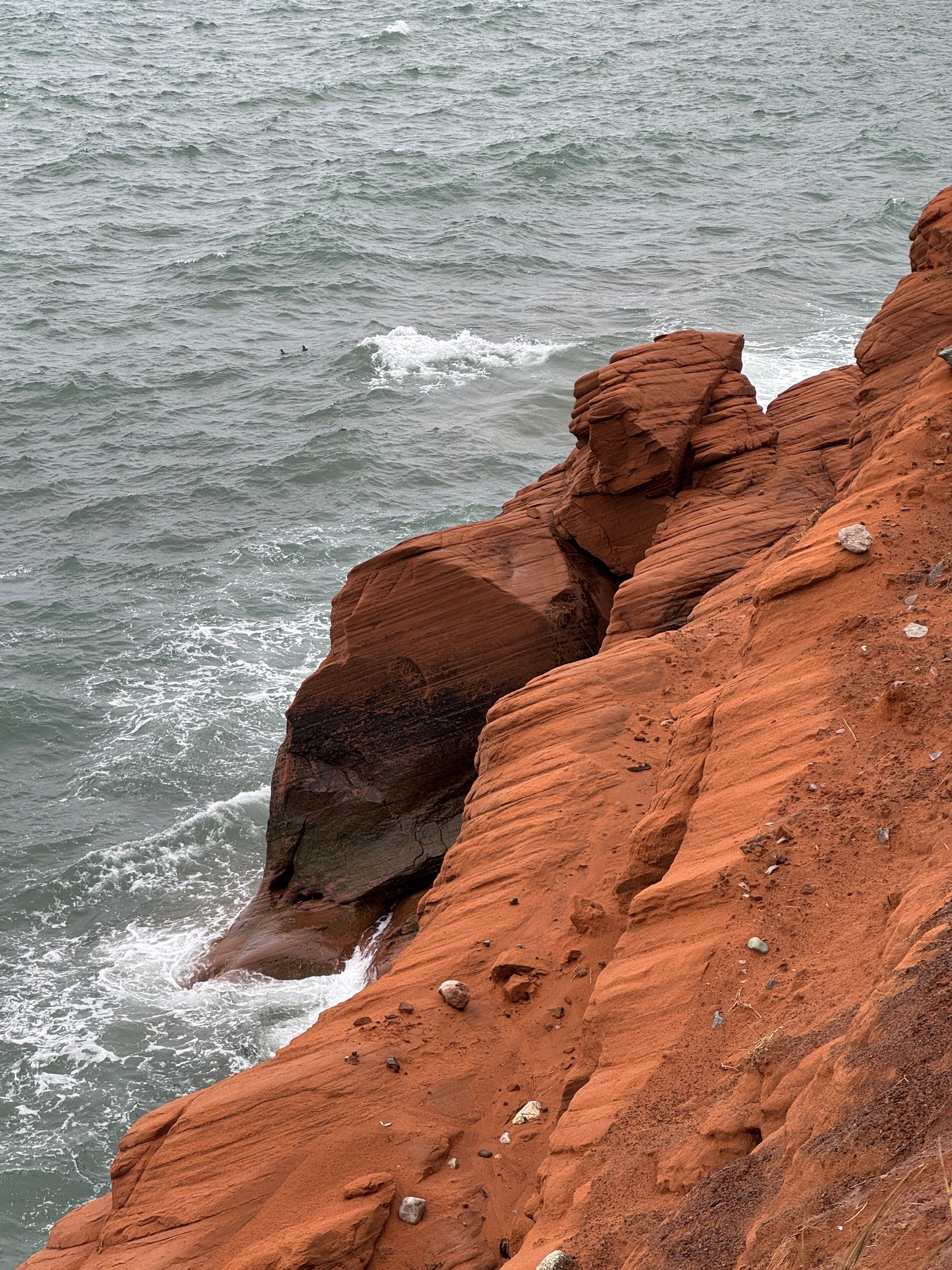
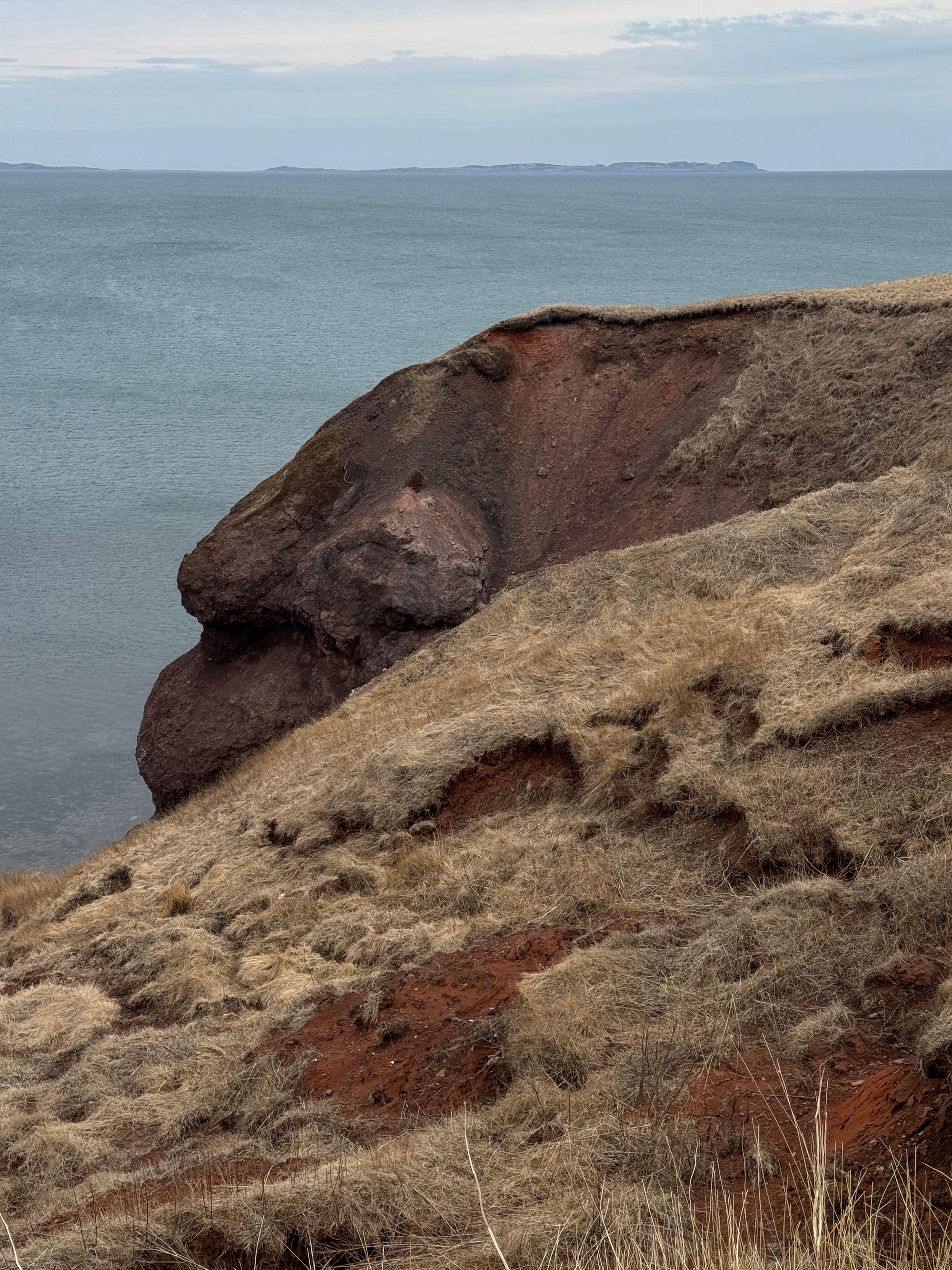
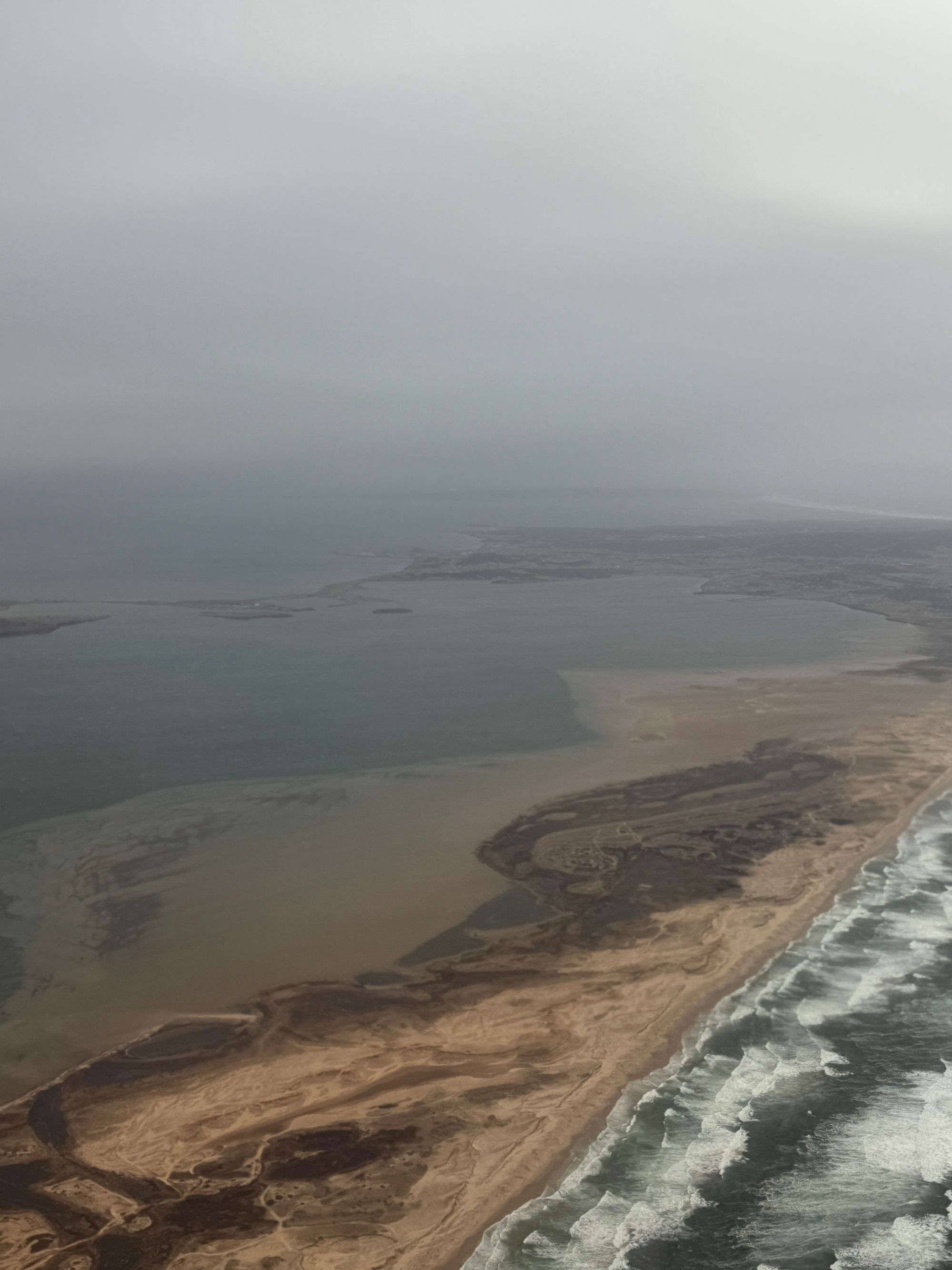
Located in the Magdalen Islands, the house establishes a thoughtful relationship with the coastline, the landscape, and the vernacular forms that define the archipelago. Perched on a natural plateau overlooking the dunes of Havre-Aubert Island, the house settles into its surroundings with restraint, in dialogue with the land and the existing built environment.
The project draws inspiration from Magdalen vernacular architecture, understood as a body of building principles and craftsmanship shaped by the climate, geography, and island way of life. Rather than reproducing its forms, the house offers a contemporary interpretation rooted in simplicity, durability, and a sensitive understanding of place.
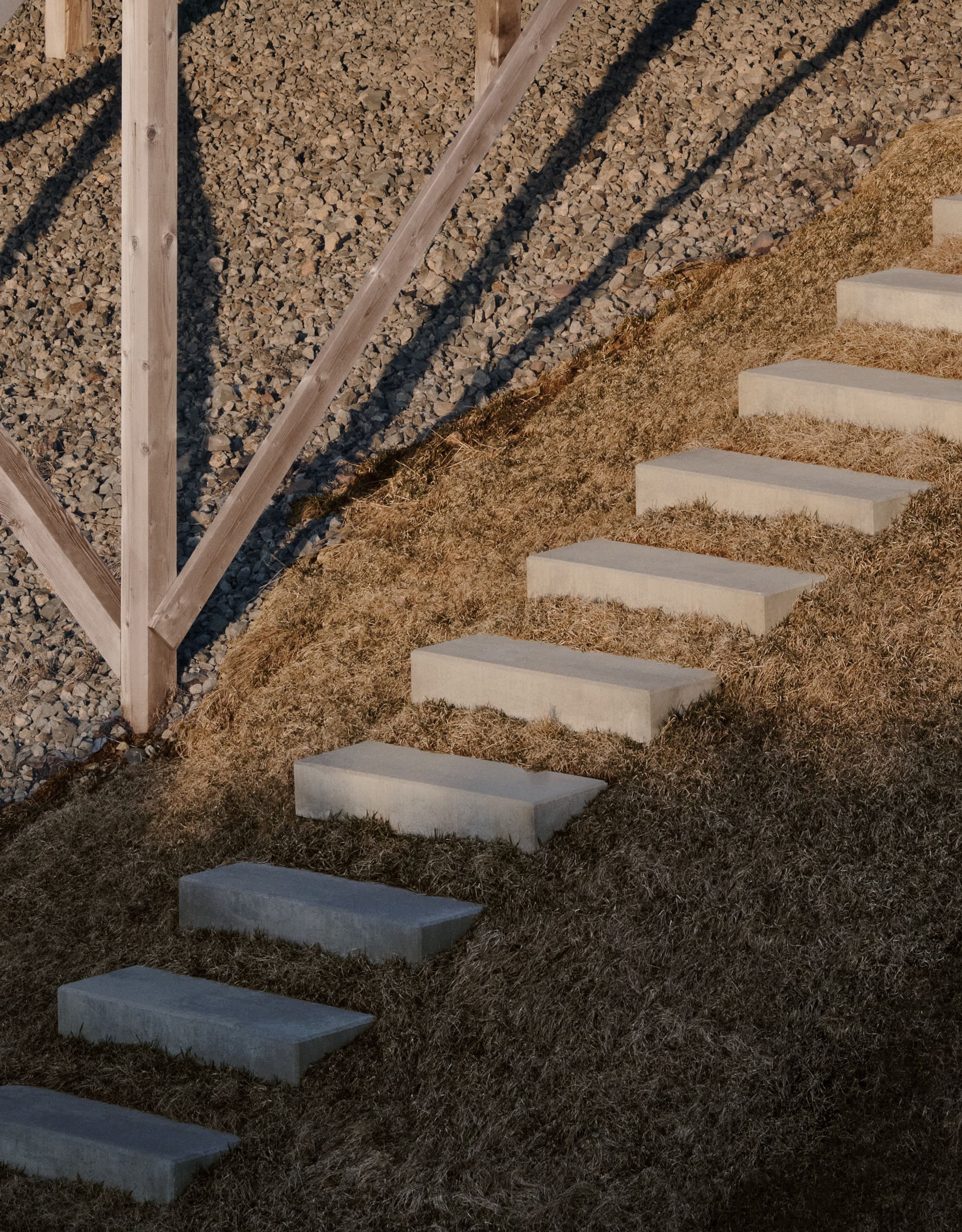
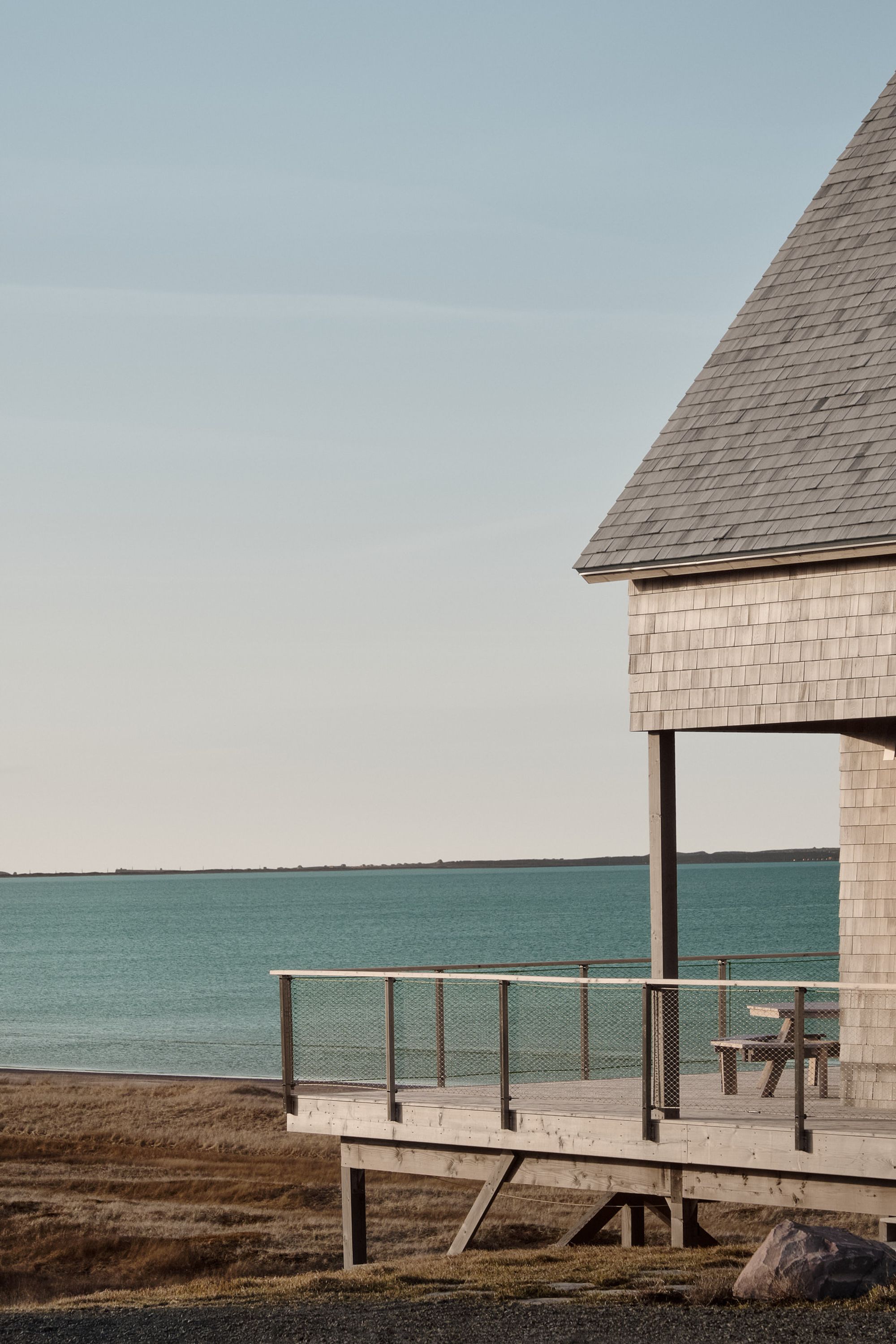
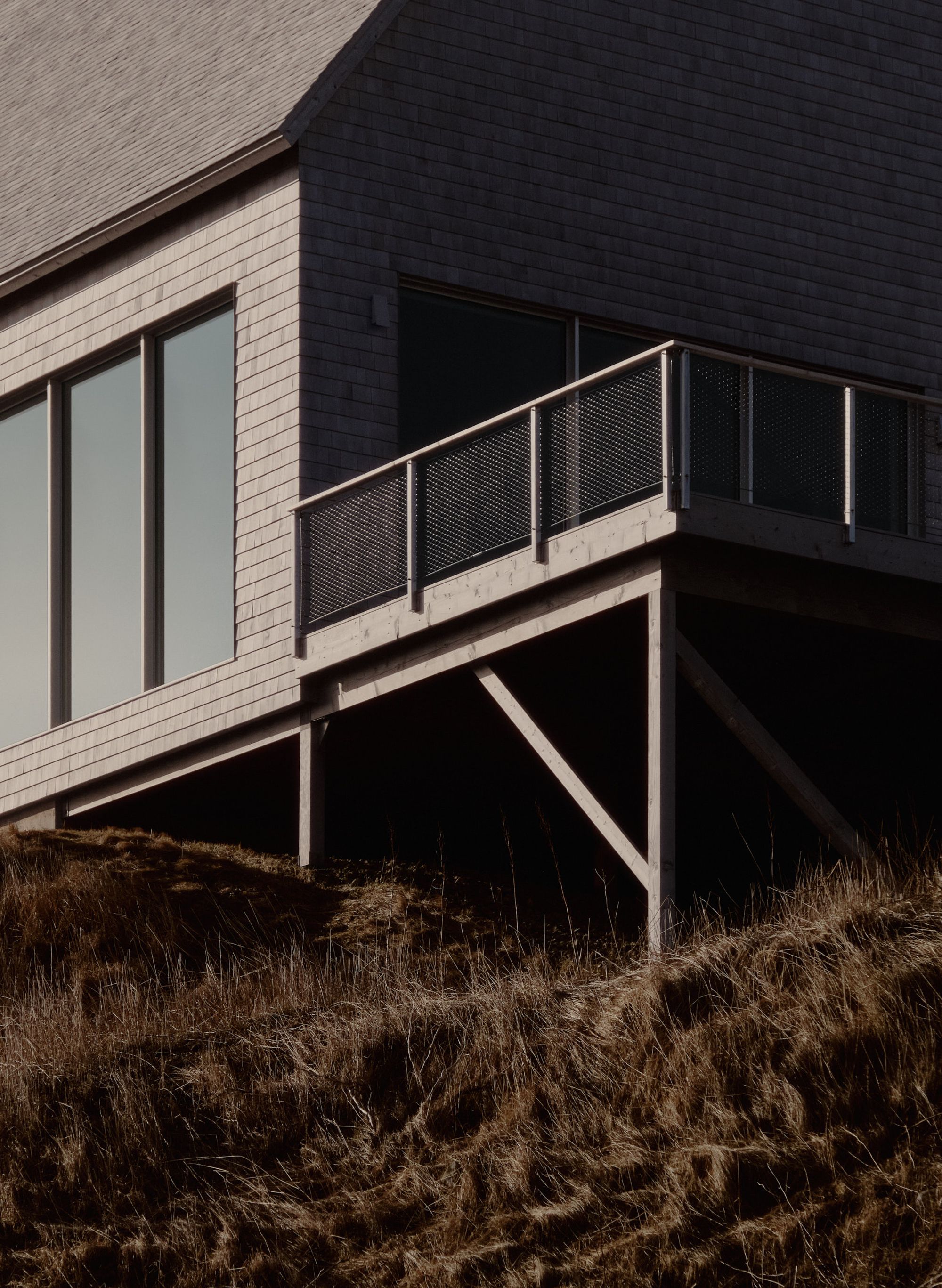
In a particularly fragile coastal setting, the building's siting, structure, and construction respond directly to the realities of the site. Set back from the protected dunes and positioned along the edge of an inhabited plateau, the house is partially supported on timber piles to limit excavation, reduce the amount of concrete required, and preserve the surrounding natural environments. This approach maintains a close relationship with the landscape while minimizing impacts on the existing soil and vegetation.
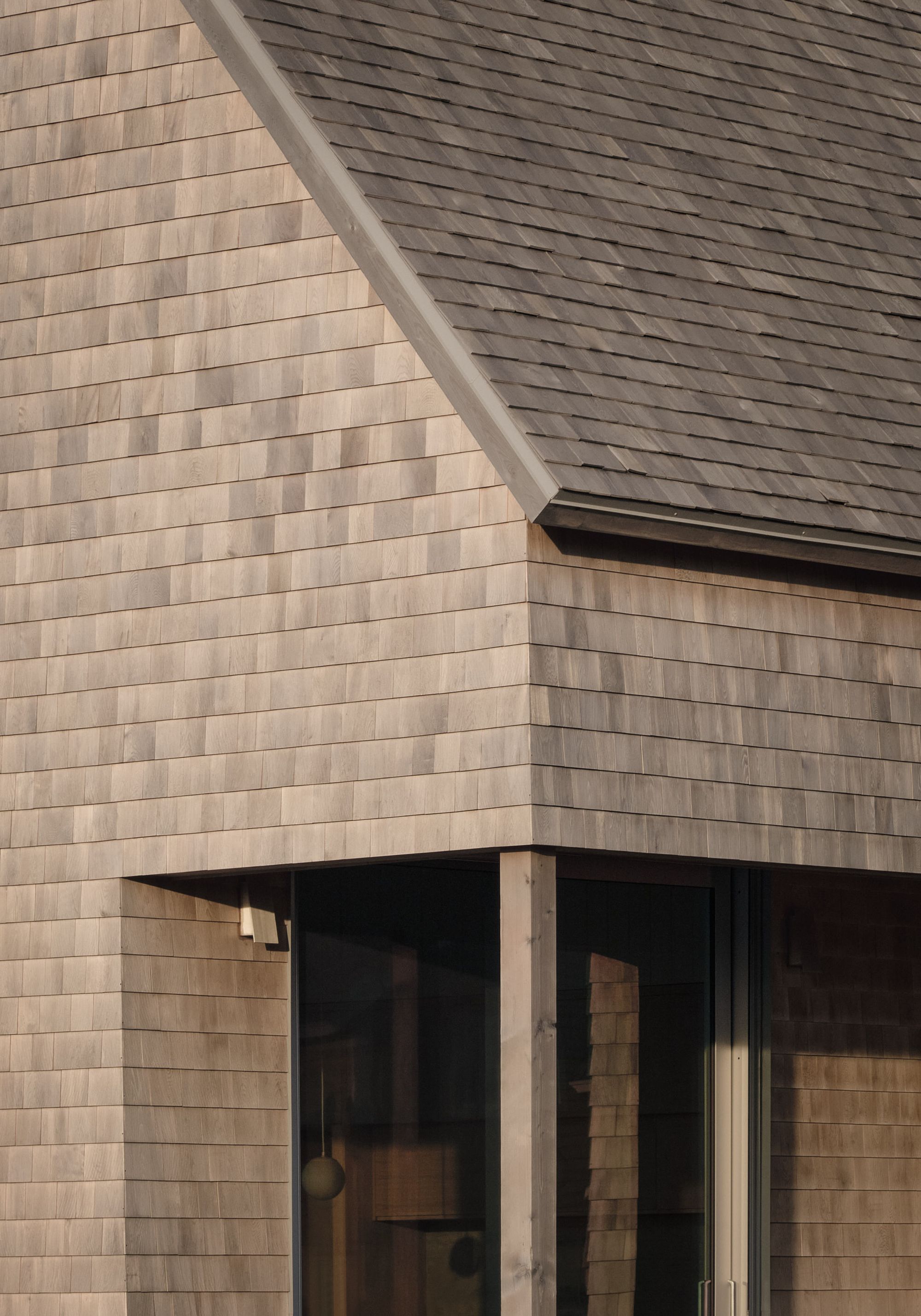
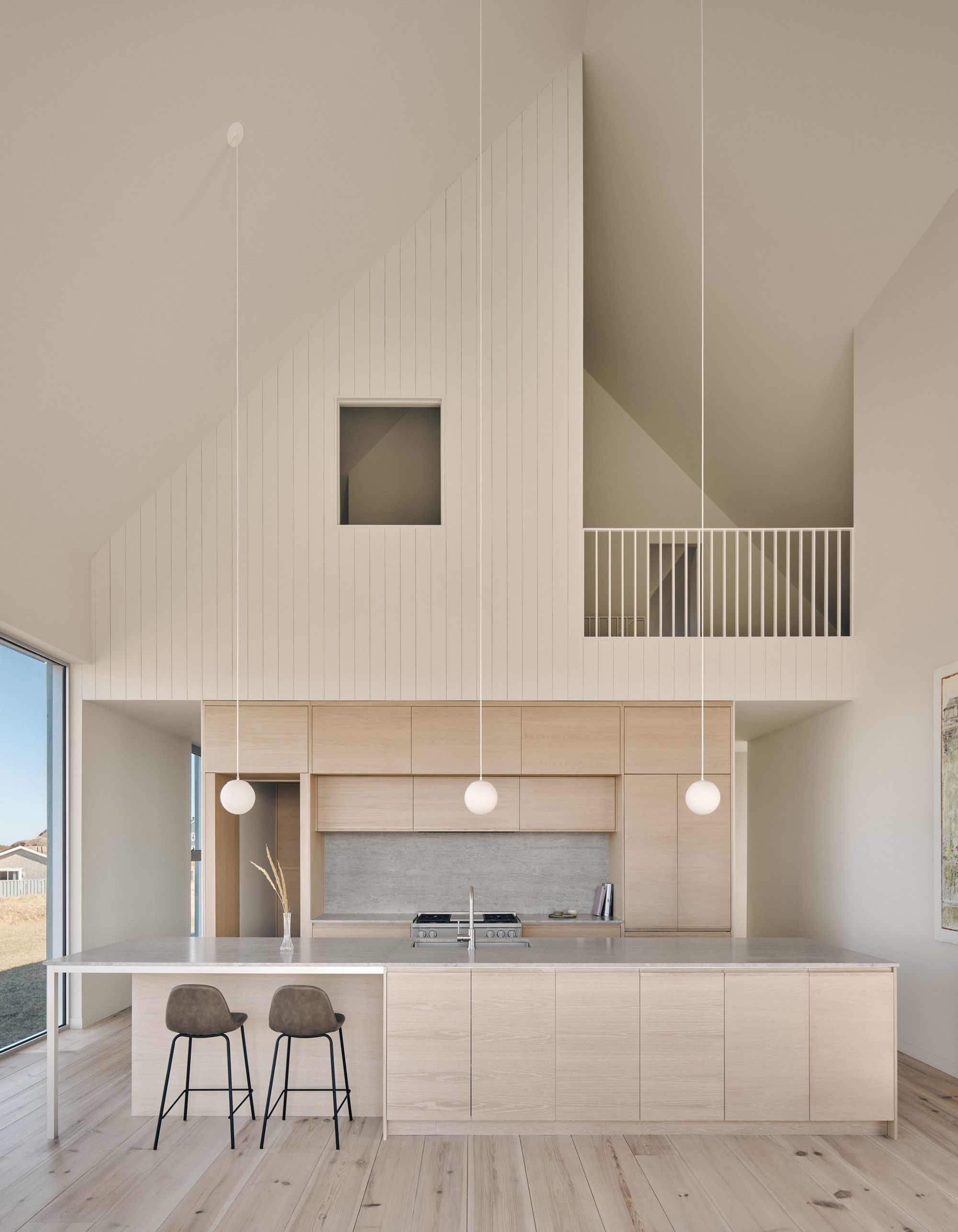
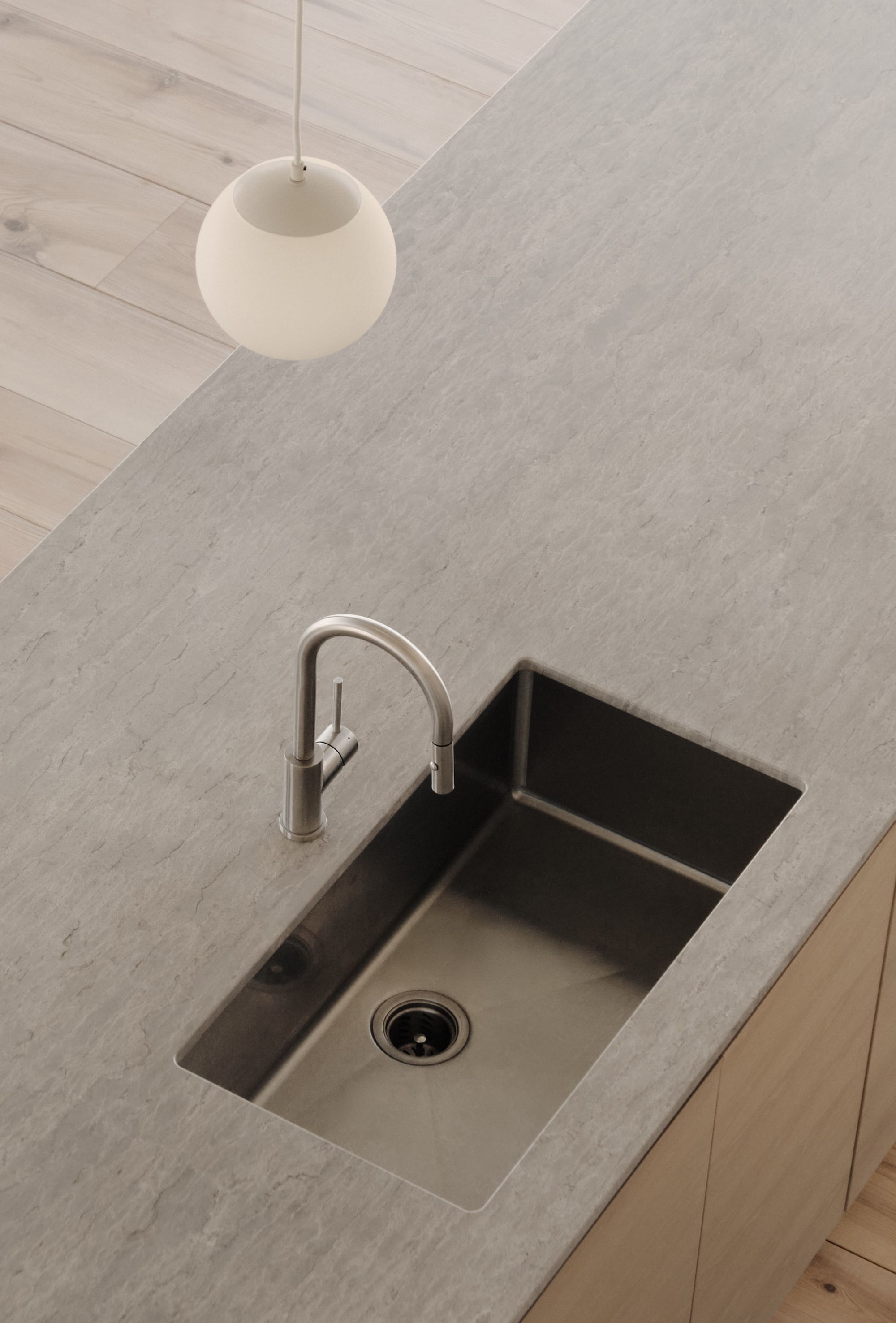
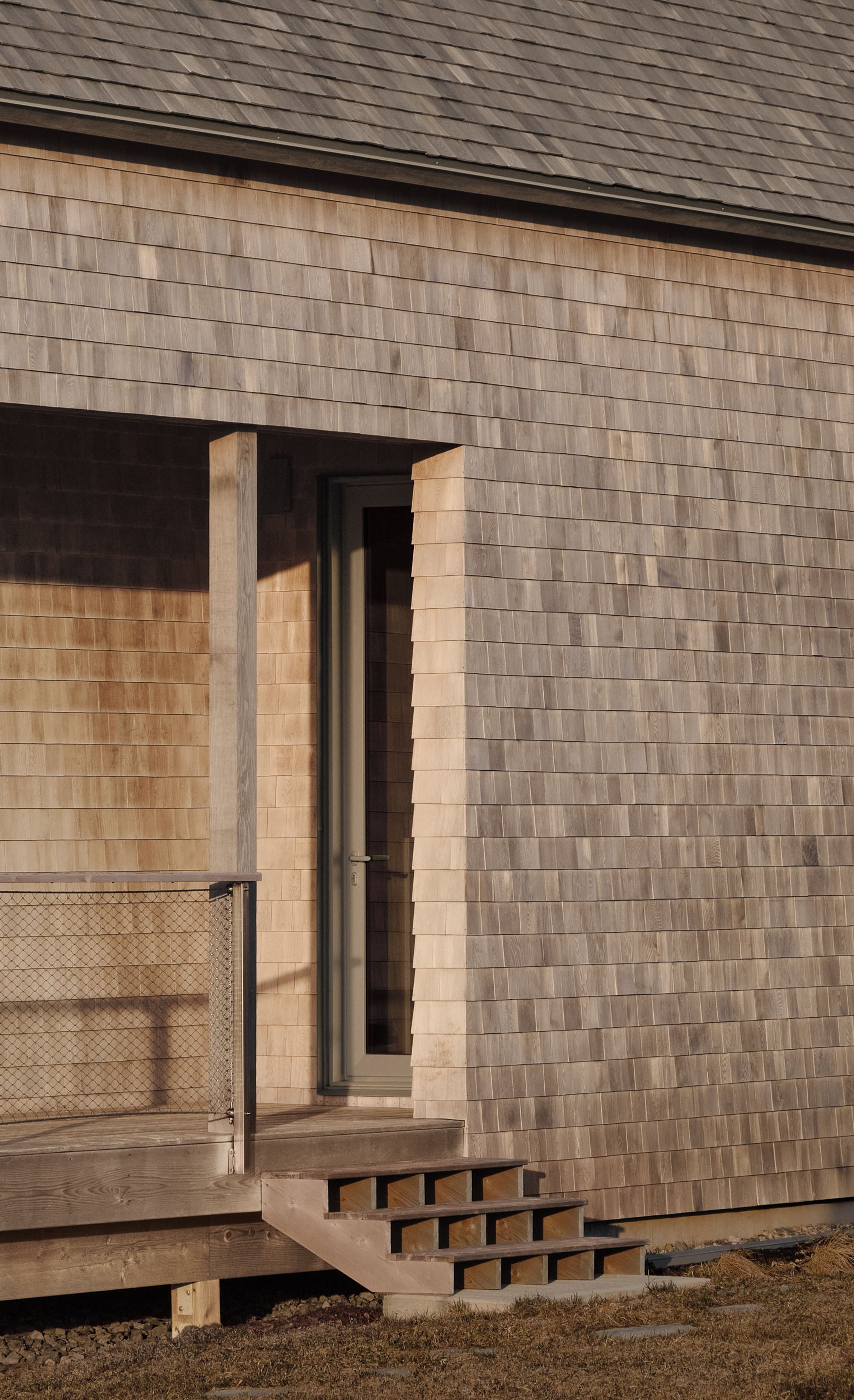
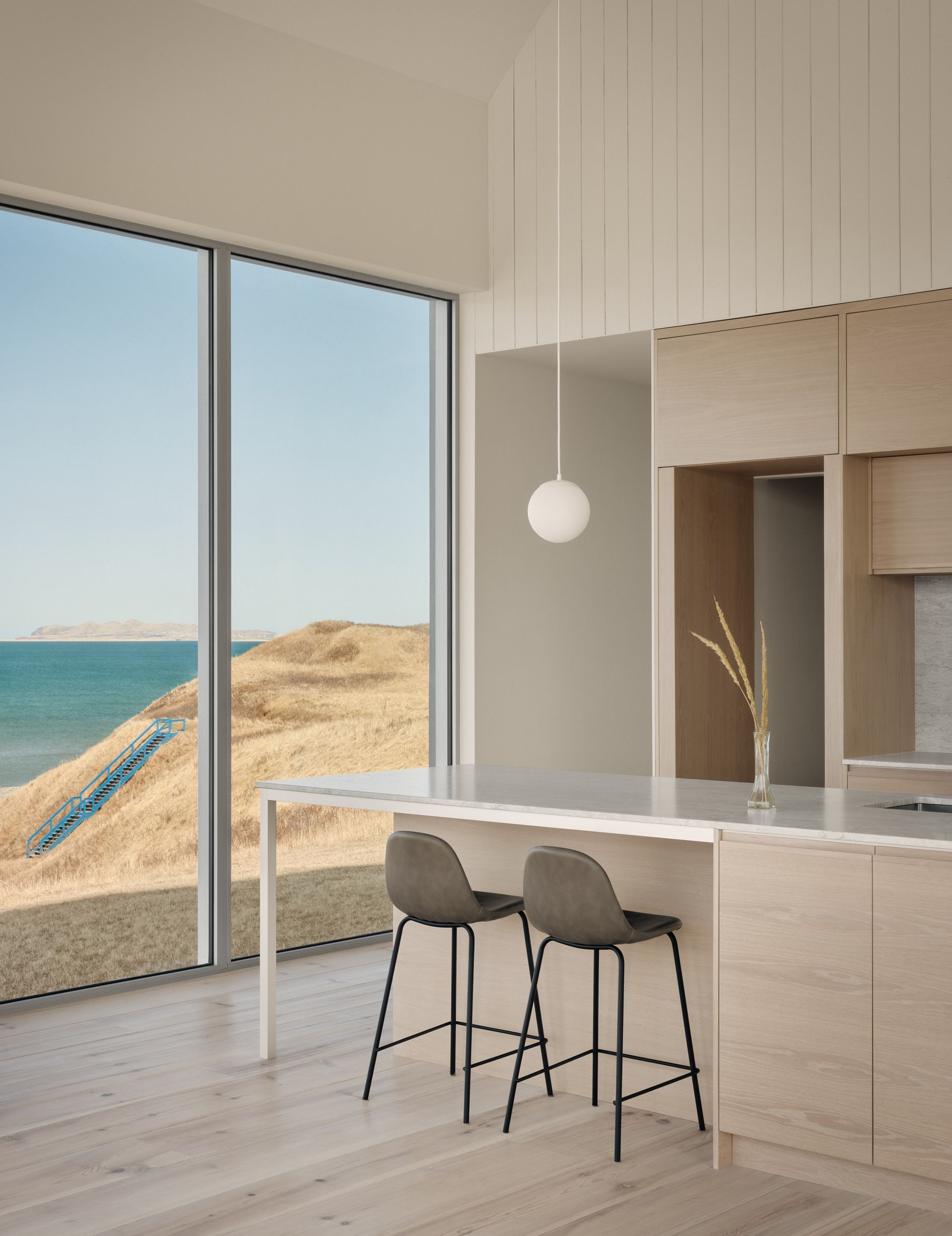
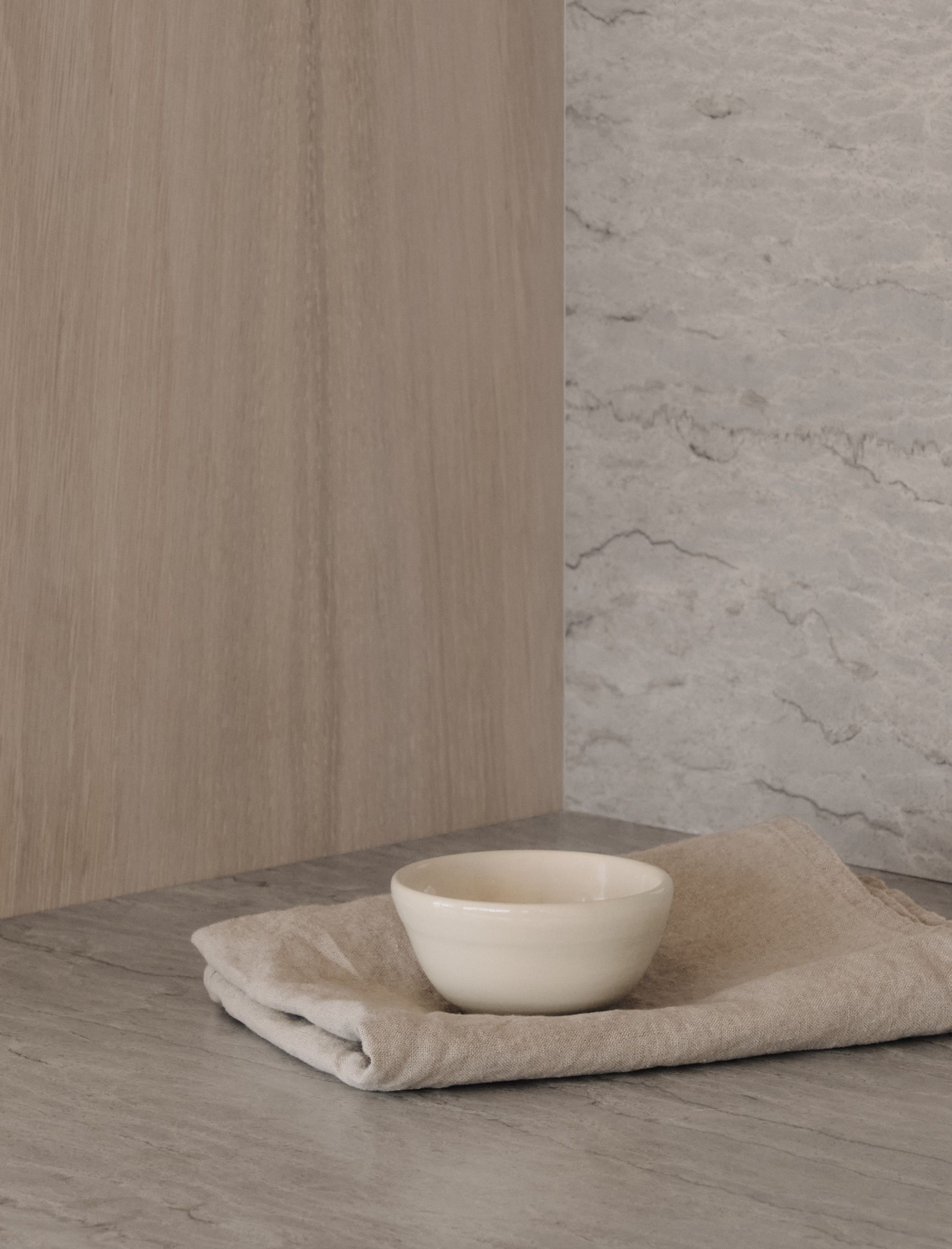
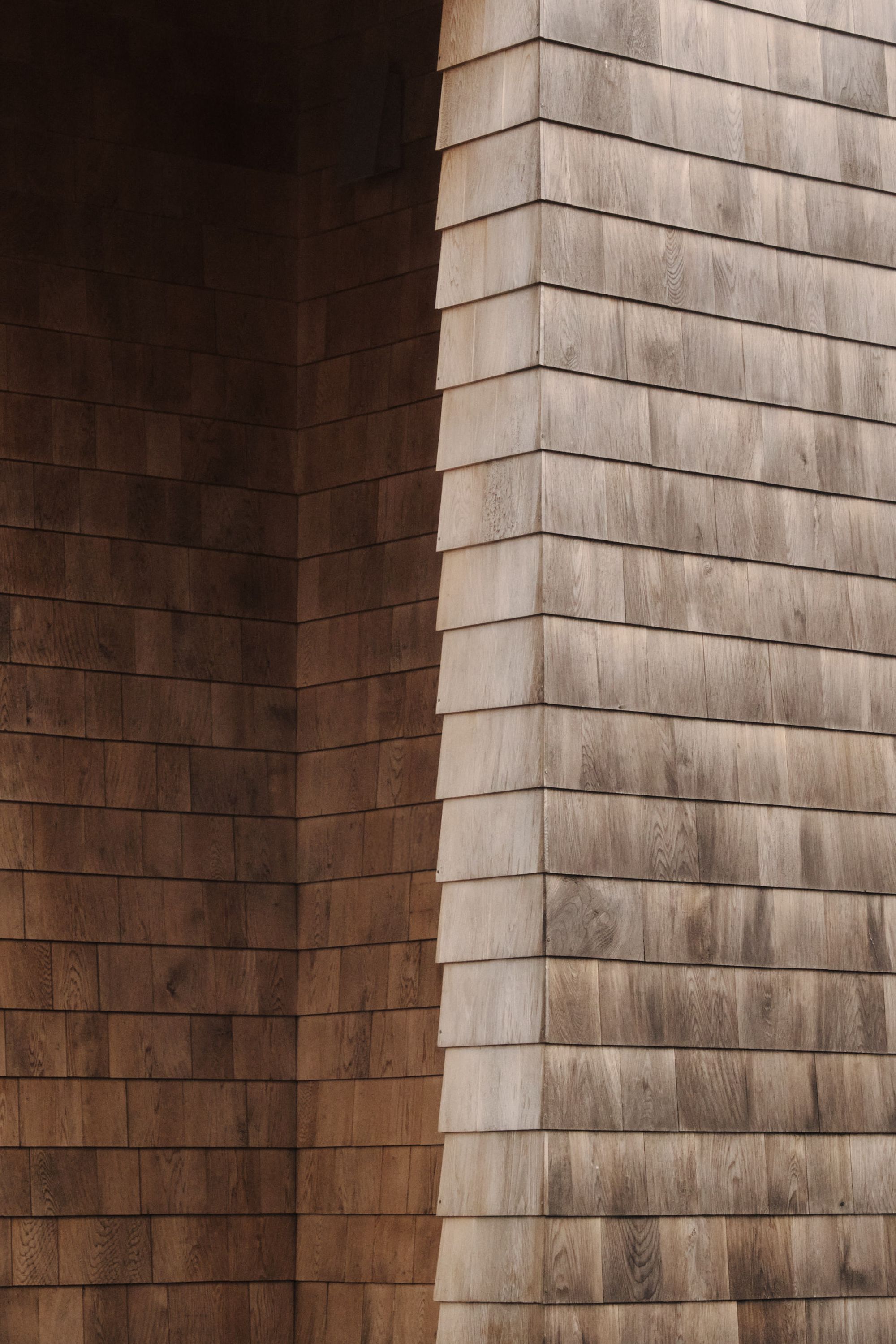
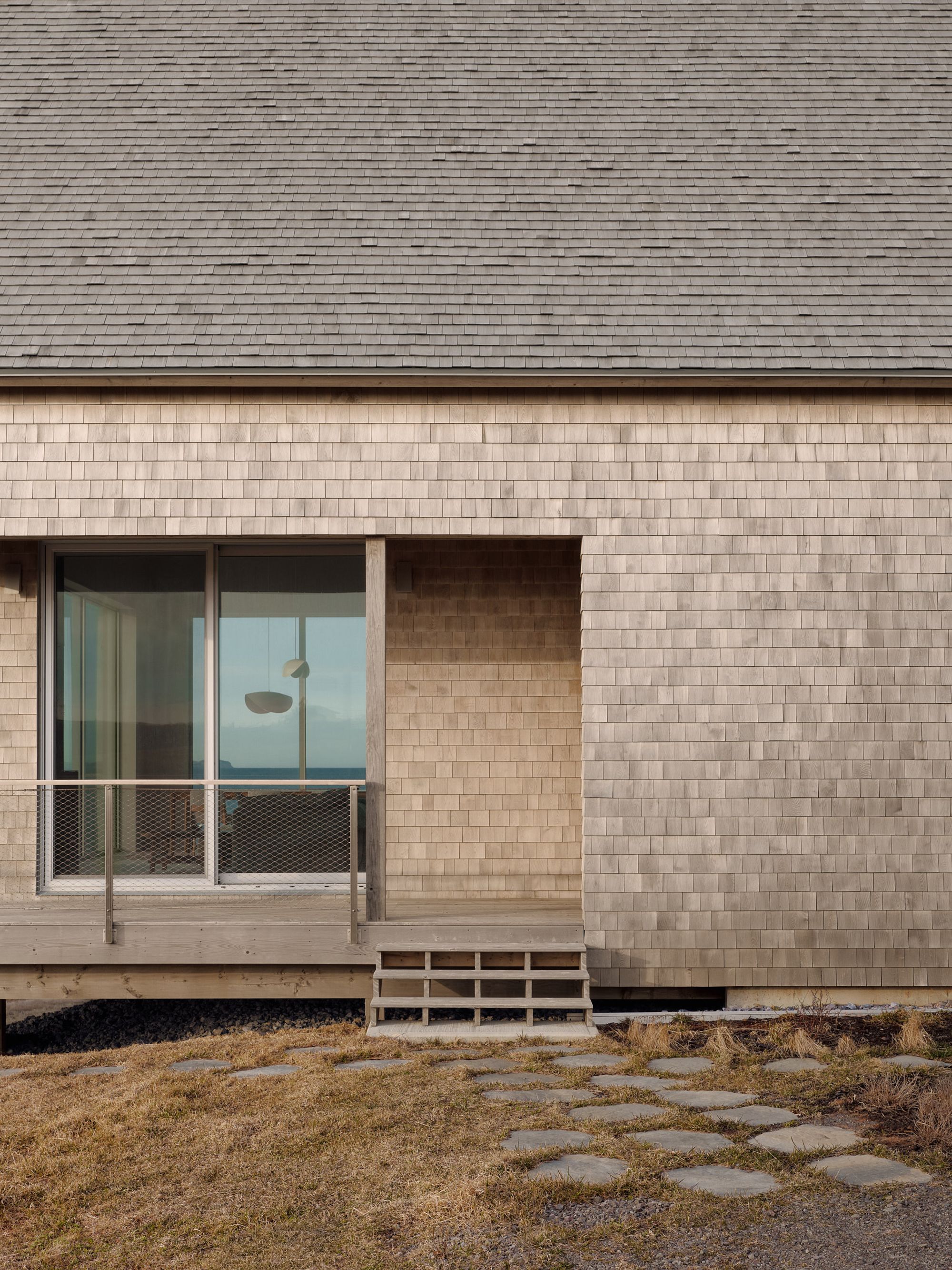
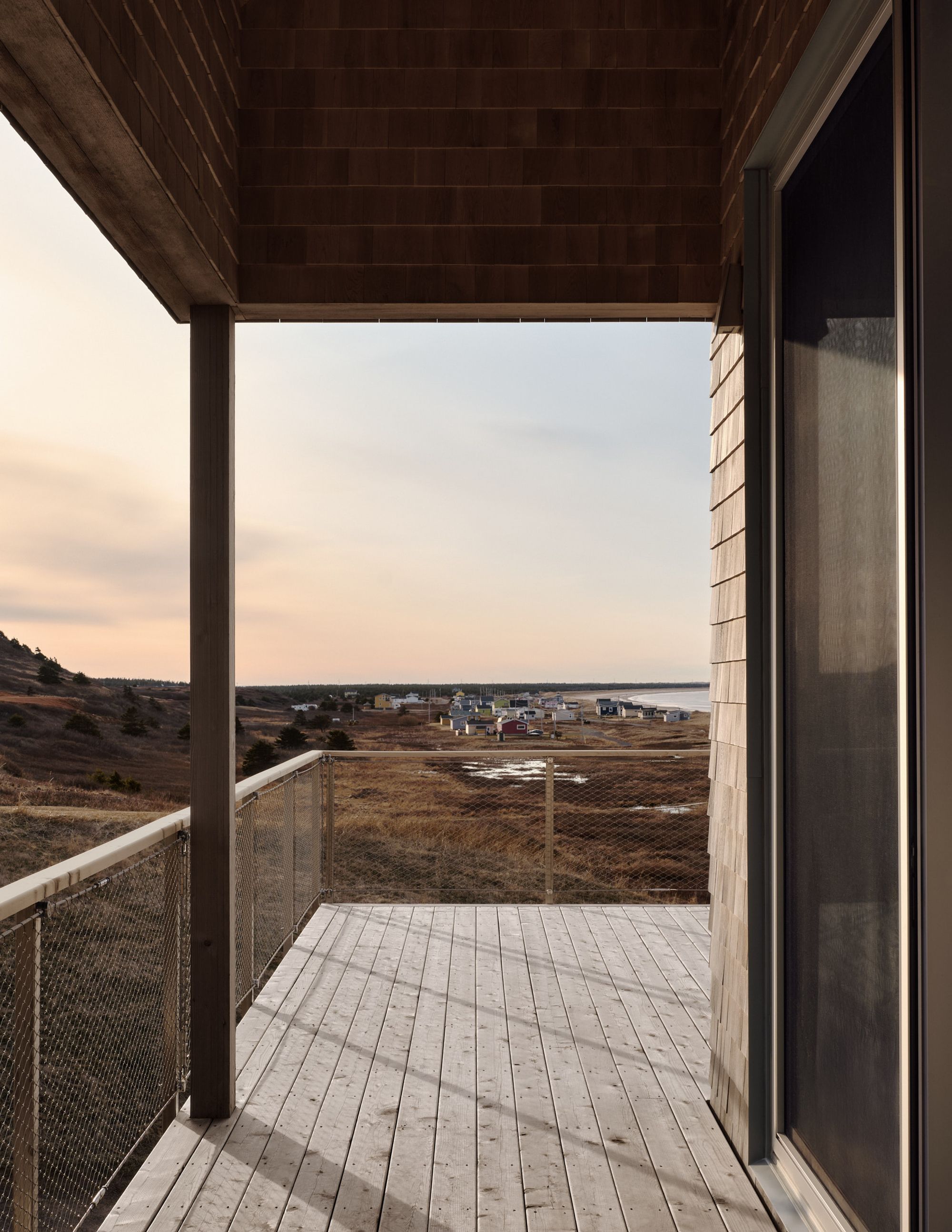
Materiality extends this reflection. Cedar shingles, eastern hemlock, natural stone, and other durable materials were selected for their ability to weather gracefully and withstand the maritime climate. The project also celebrates local craftsmanship, from the custom millwork to the artwork and objects created by artisans from the Magdalen Islands.
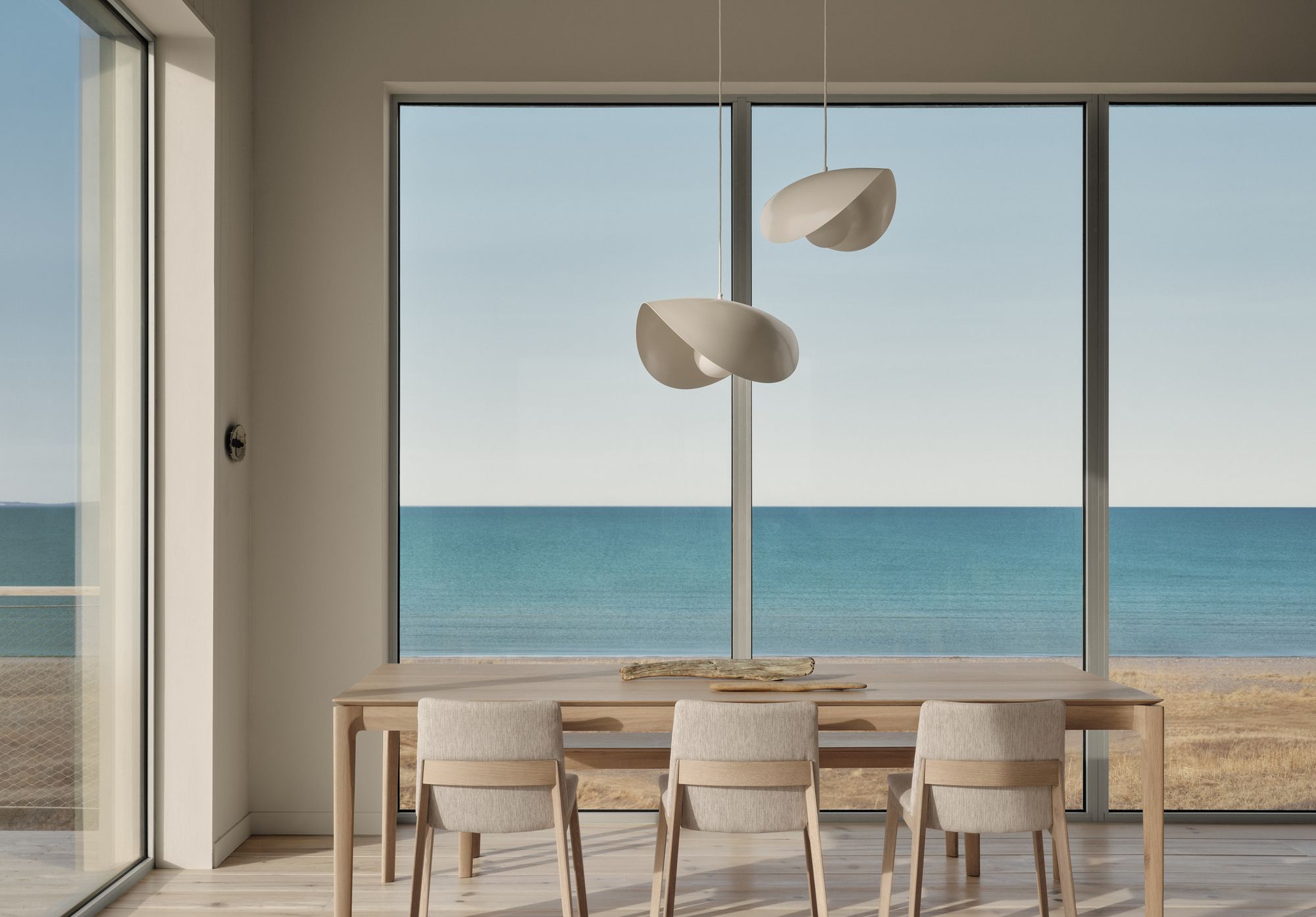
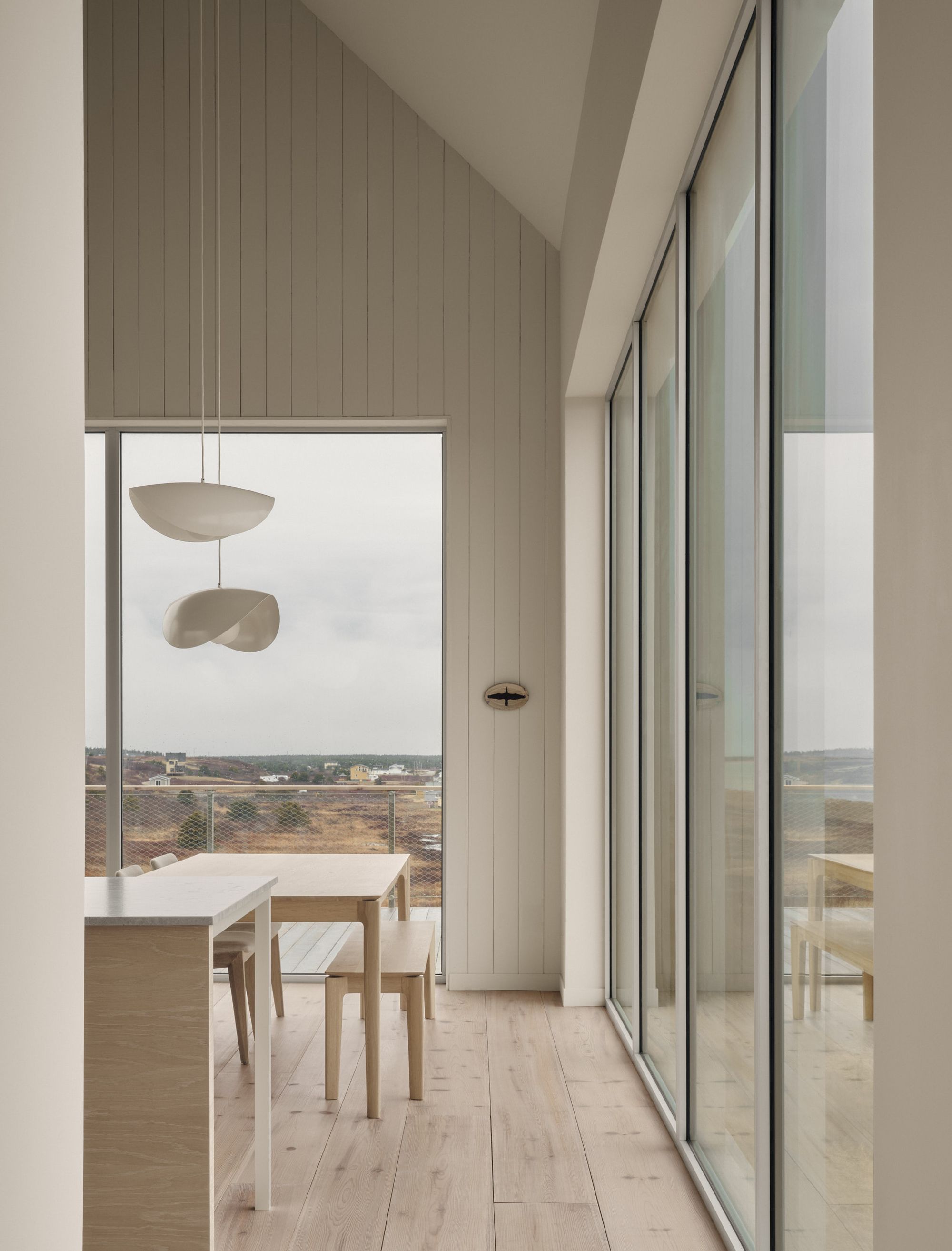
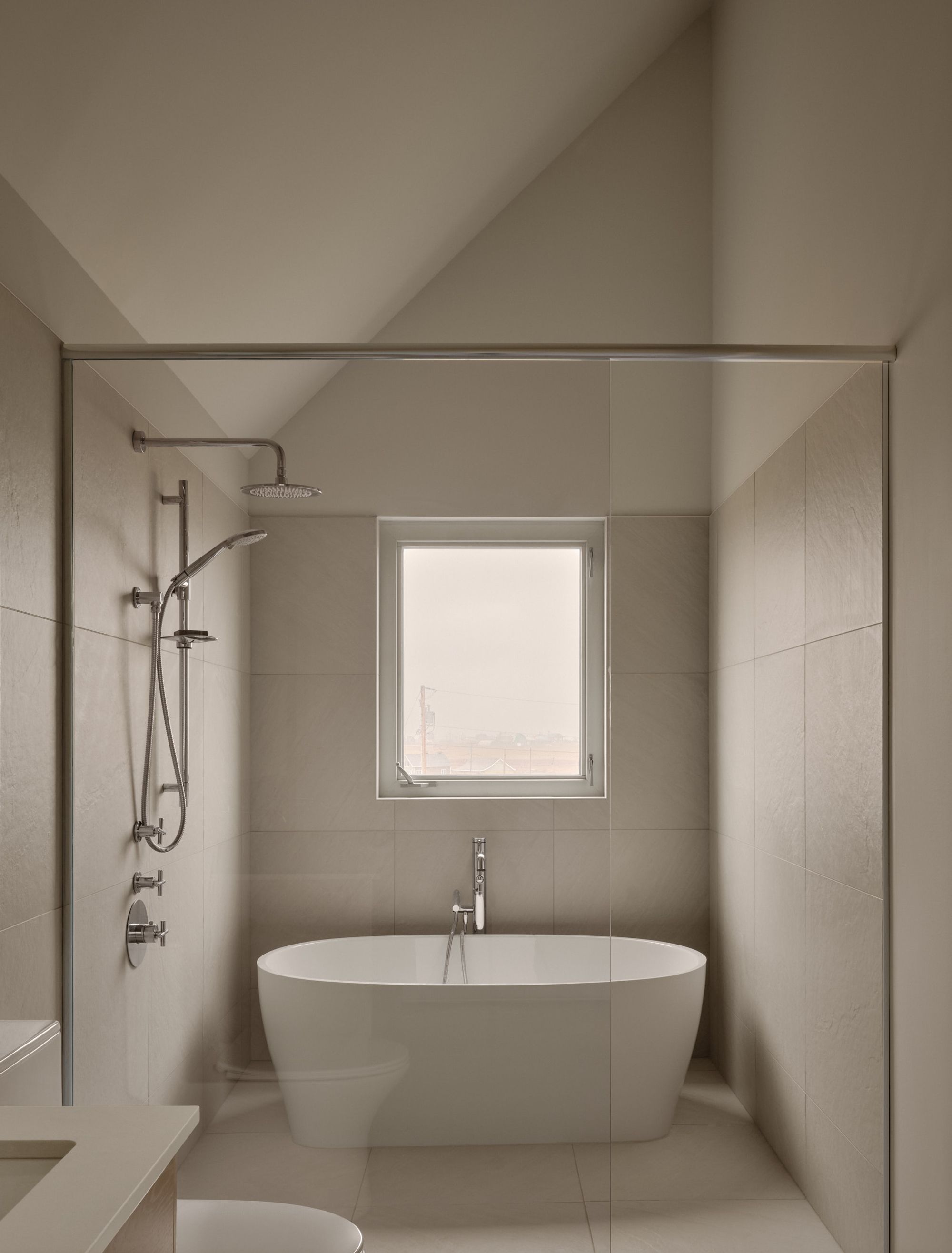
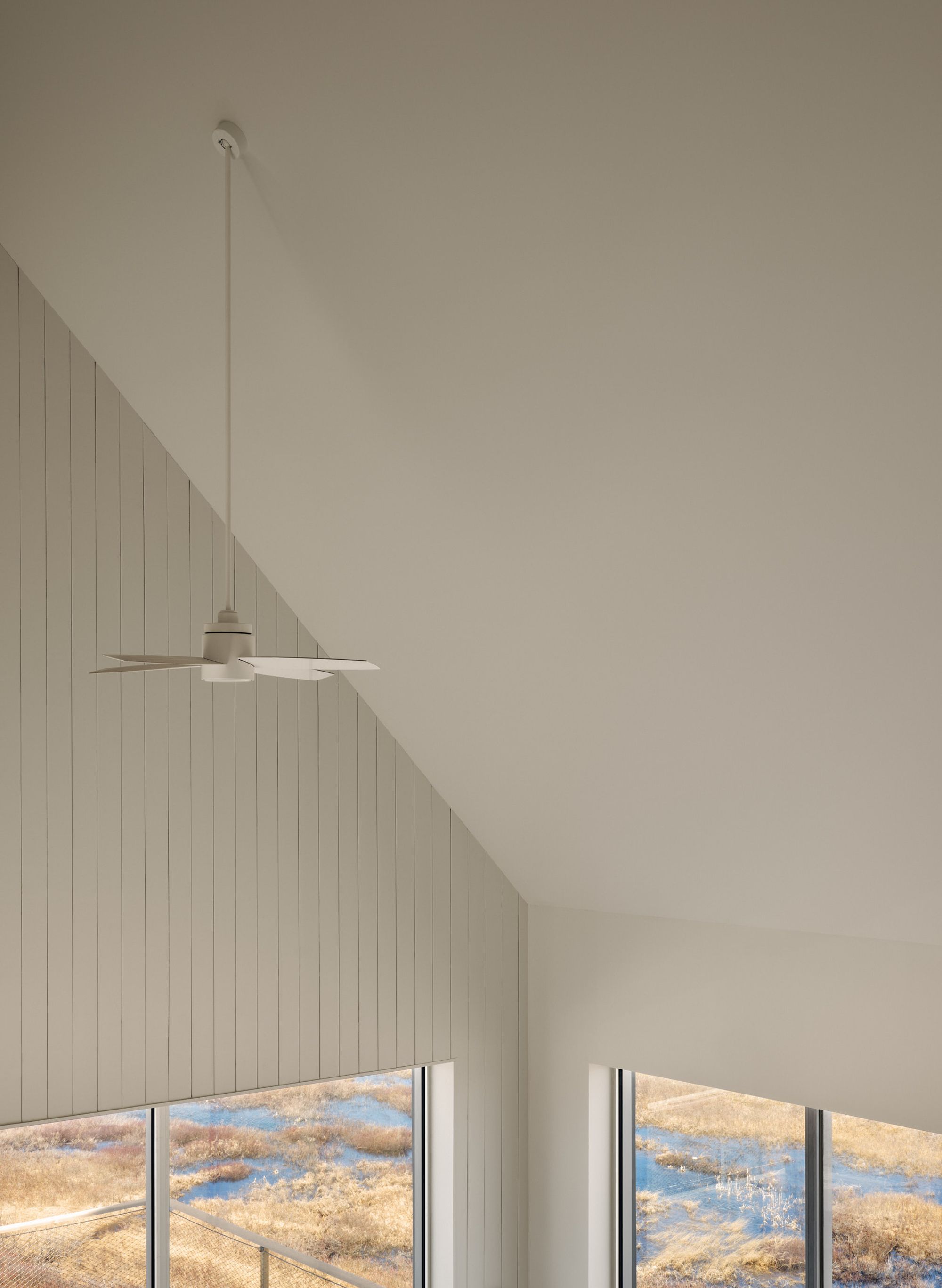
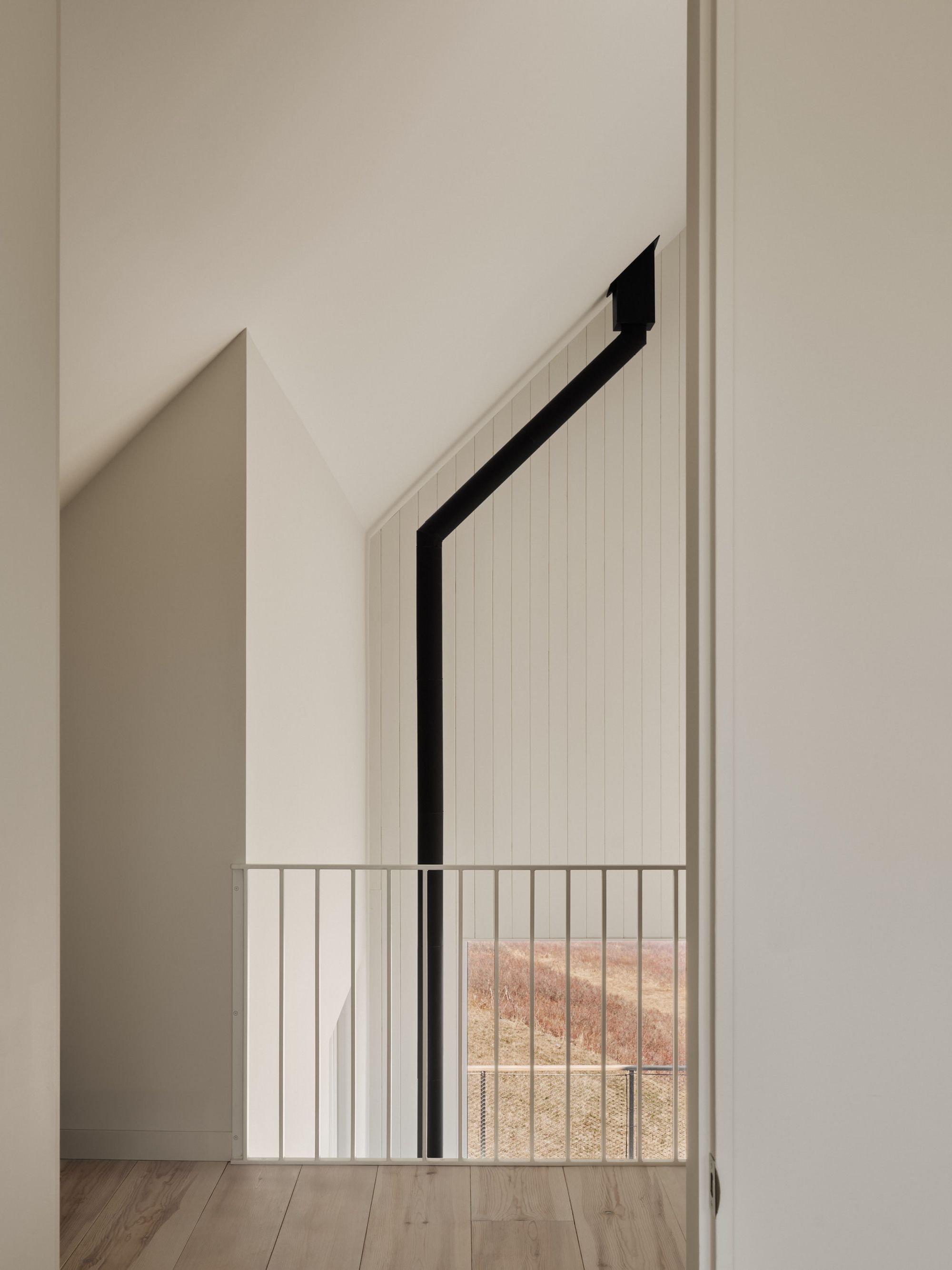
Organized around a compact plan and essential functions, the house prioritizes the quality of space over its quantity. A double-height living area, generous openings, and a simple spatial organization create an expansive experience of the landscape without increasing the building's footprint. Magdalen House proposes an architecture deeply rooted in the land, where sustainability depends not only on the performance of buildings, but also on their capacity to be inhabited, maintained, and passed on.